



What's Happening?
Matt and Janna Splitter, fifth-generation farmers in Kansas, have expanded their farming operation from 1,200 acres to 13,000 acres by focusing on sustainability, technology, and building strong relationships. Initially facing challenges due to dropping
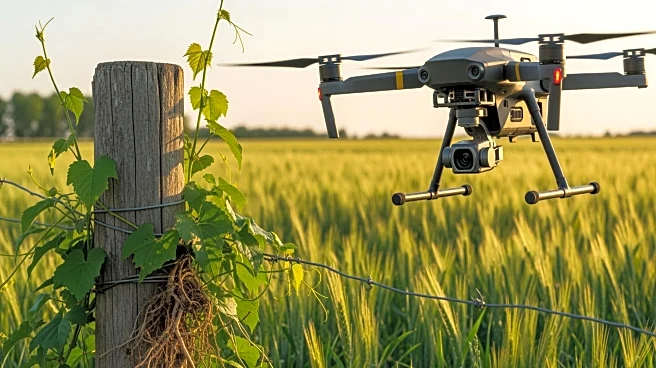
commodity prices, they formed a mentor-mentee relationship with neighboring farmers, the Schefflers, which led to a transition plan allowing the Splitters to take over the Schefflers' no-till operation. The Splitters have embraced technology, using blockchain and identity-preserved systems to track crop history and ensure transparency. Their approach has not only increased their operational scale but also earned them recognition, with Matt being named Field To Market's 2025 Farmer of the Year.
Why It's Important?
The Splitters' success story highlights the importance of innovation and collaboration in modern agriculture. By adopting sustainable practices and leveraging technology, they have improved their return on investment and ensured the long-term viability of their farm. This approach is crucial for the U.S. agricultural sector, which faces challenges such as climate change, fluctuating market prices, and the need for sustainable practices. The Splitters' model demonstrates how farmers can adapt to these challenges by integrating technology and building strong community relationships, potentially serving as a blueprint for other farmers across the country.
What's Next?
The Splitters plan to continue expanding their operation while maintaining their focus on sustainability and technology. They aim to further integrate advanced technologies that provide a clear return on investment, ensuring financial stability and growth. As they manage a large-scale operation across multiple states, they will likely explore new partnerships and opportunities to enhance their farming practices. Their commitment to leaving a legacy for future generations suggests a continued focus on innovation and sustainability, which could influence broader agricultural practices in the U.S.