


What's Happening?
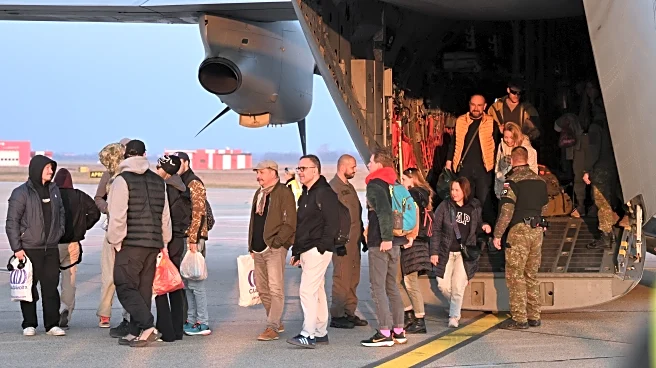
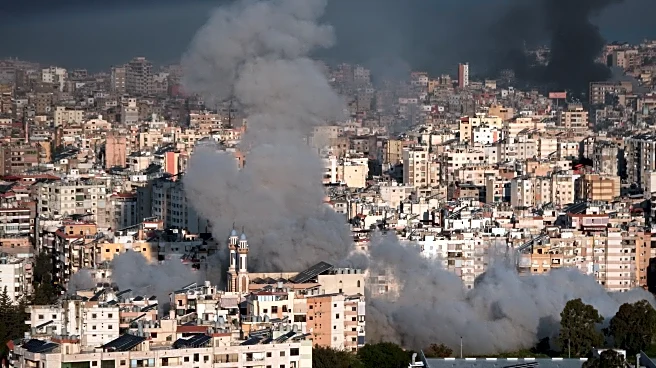
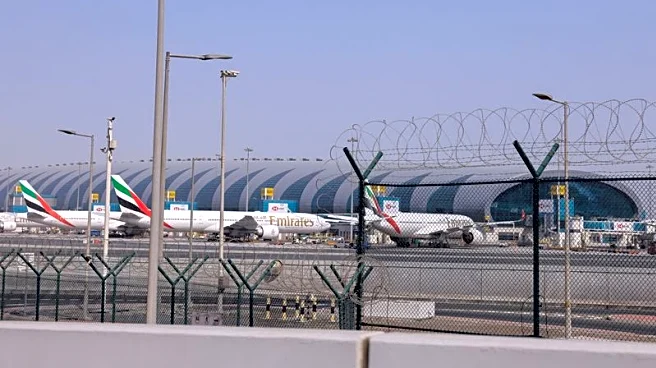
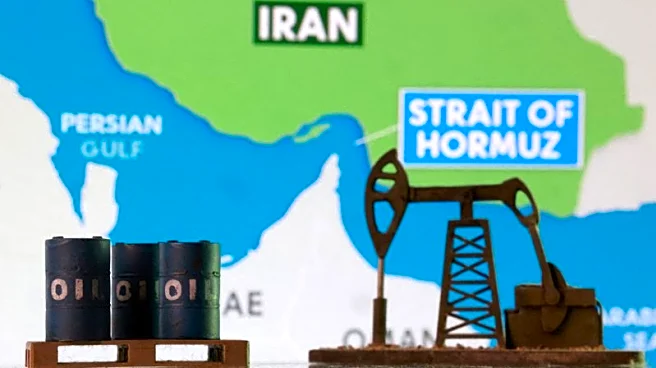
The ongoing conflict in the Middle East has significantly impacted Dubai's status as a major global aviation hub. The shutdown of Gulf airspace, following U.S. and Israeli strikes against Iran, has disrupted airline networks worldwide. Dubai, known for
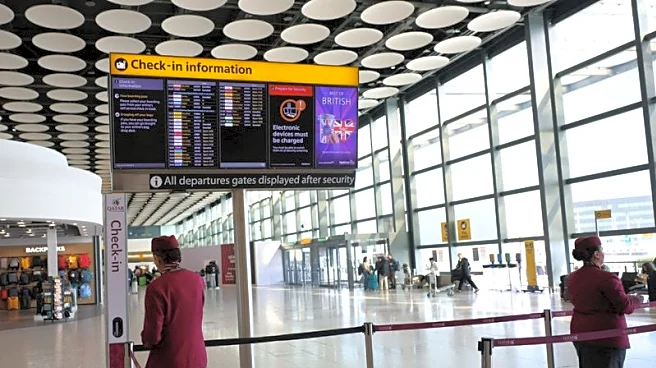
its strategic location and extensive global network, faces the challenge of managing displaced passengers and restoring its operations. The conflict has also raised concerns about the timing of the expansion of a new airport outside the city. Despite these challenges, analysts believe that Dubai's aviation sector will recover due to its established network and strategic geographic position.
Why It's Important?
Dubai's role as a central hub in global air travel underscores the vulnerability of international networks to regional conflicts. The disruption highlights the reliance on a few key hubs, which can have widespread implications for global travel and trade. The situation also presents opportunities for competitors like Turkey, Saudi Arabia, and India to capitalize on the disruption. The potential shift in passenger preferences towards direct flights could impact the traditional hub-and-spoke model, affecting airlines' operational strategies and economic outcomes.
What's Next?
In the short term, Dubai will focus on restoring its network and minimizing the impact on inbound flights. The aviation industry will closely monitor the geopolitical situation, as prolonged conflict could lead to lasting changes in travel patterns. Airlines may need to offer incentives to attract passengers back to the region. Additionally, the competition from other regional hubs may intensify, prompting strategic adjustments in airline operations and infrastructure development.
Beyond the Headlines
The conflict and its impact on Dubai's aviation hub may prompt a reevaluation of risk management strategies in the aviation industry. The reliance on a few major hubs could lead to discussions on diversifying routes and enhancing resilience against geopolitical disruptions. The situation also raises questions about the long-term sustainability of the hub-and-spoke model in the face of evolving geopolitical and technological landscapes.