





What's Happening?
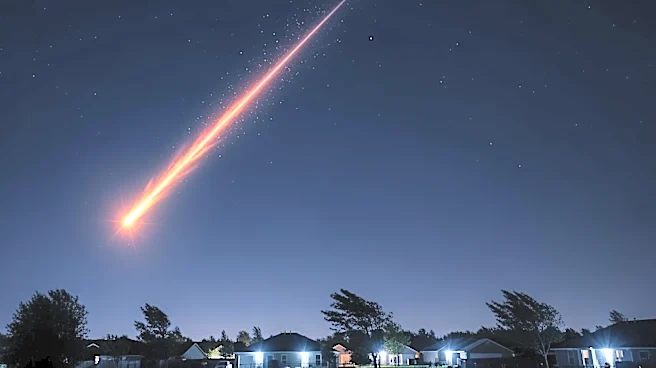
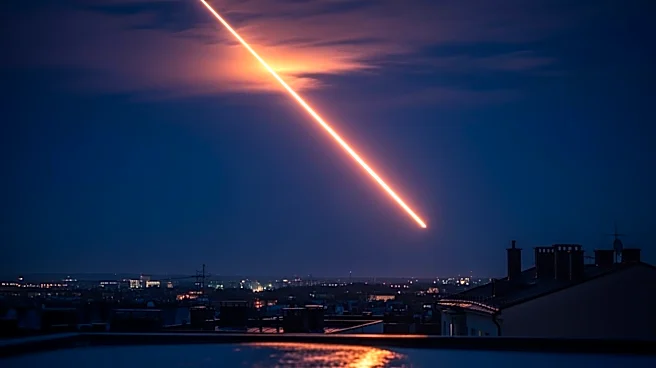
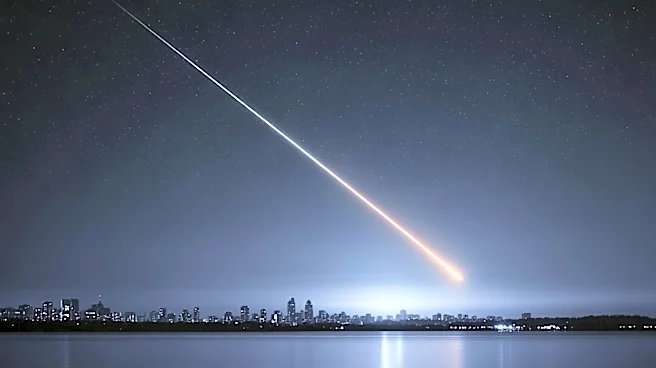
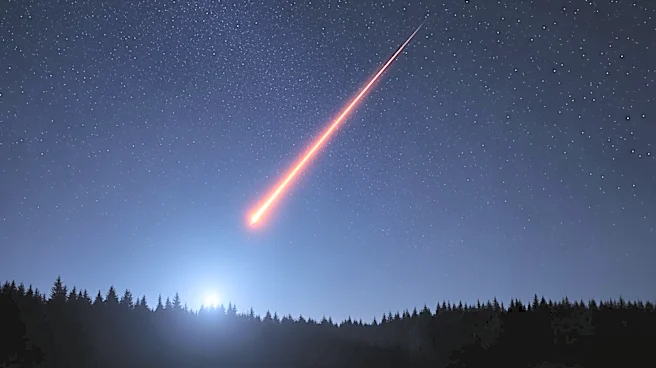
A loud boom heard across Greater Boston on May 30 is likely attributed to a meteor exploding in the atmosphere. The sound was first reported at 2:11 p.m., and the U.S. Geological Survey did not detect any earthquake activity at the time. Weather radar
detected a flash in an area without thunder activity, consistent with a bolide, a meteor that explodes in the atmosphere. While the radar signature suggests a meteor, confirmation requires finding debris pieces. Residents from northern New England to southern Rhode Island reported the sudden noise, which caused a brief period of confusion and concern.
Why It's Important?
The incident highlights the challenges in quickly identifying and confirming the causes of unusual atmospheric events. While the radar data strongly suggests a meteor, the need for physical evidence underscores the complexities involved in space monitoring. The event also emphasizes the importance of public communication and the role of agencies like the National Weather Service and NASA in providing timely information to prevent panic. Understanding such phenomena is crucial for improving predictive models and ensuring public safety in the event of larger impacts.
What's Next?
Further investigation may involve searching for meteor debris to confirm the event's cause definitively. The incident may prompt discussions on enhancing meteor detection capabilities and public awareness programs. Agencies will likely continue to refine their methods for quickly identifying and communicating about such events. The event serves as a reminder of the need for ongoing research and international collaboration in space monitoring to address potential future threats from larger meteors.