







What's Happening?
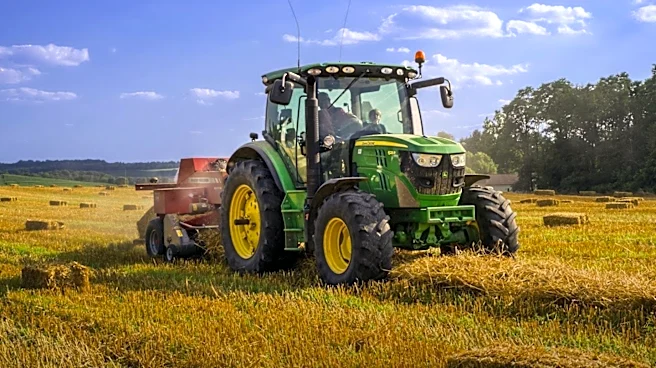
A federal court in the U.S. District Court for the Northern District of Illinois has set a fairness hearing for January 19, 2027, to consider final approval of John Deere's proposed $99 million right-to-repair settlement. This settlement is part of an ongoing
class-action lawsuit filed by farmers across the country who alleged that John Deere restricted their ability to repair their own equipment. The court issued an amended order of preliminary approval, stating that the settlement is "fair, reasonable, adequate and in the best interests of the settlement class." The class is expected to include over 200,000 members who purchased repair services from John Deere or its authorized U.S. dealers between January 10, 2018, and May 18, 2026. The deadline for notifying the settlement class is August 28, 2026, with objections due by December 4, 2026, and claim forms by December 31, 2026.
Why It's Important?
This settlement is a significant development in the 'right-to-repair' movement, particularly within the U.S. agricultural sector. It addresses a long-standing grievance among farmers who have faced limitations in repairing their John Deere equipment, often leading to higher costs and downtime. The $99 million settlement, if approved, will provide financial relief to a large number of farmers and could set a precedent for other manufacturers regarding repair access. More broadly, it highlights the growing legal and public pressure on companies to allow consumers and independent repair shops greater access to diagnostic tools, parts, and manuals. This case could influence future legislation and corporate policies across various industries, promoting greater consumer autonomy and fostering competition in repair markets. For the U.S. economy, it could lead to a more robust independent repair sector and potentially lower operational costs for farmers.
What's Next?
The immediate next steps involve the notification of the settlement class, followed by the deadlines for objections and claim submissions. The fairness hearing in January 2027 will be a critical juncture where the court will consider all feedback before making a final decision on the settlement's approval. If approved, the distribution of the $99 million to eligible farmers will commence. Beyond this specific case, the outcome could encourage other agricultural equipment manufacturers to proactively address right-to-repair concerns to avoid similar lawsuits. It may also galvanize legislative efforts at both state and federal levels to enact broader right-to-repair laws, impacting not only agriculture but also consumer electronics, medical devices, and other sectors. Stakeholders, including consumer advocacy groups and industry associations, will closely monitor the implementation and impact of this settlement.
Beyond the Headlines
The John Deere right-to-repair settlement delves into deeper issues of ownership, intellectual property, and the balance of power between manufacturers and consumers in a technologically advanced world. The concept of 'right-to-repair' challenges the traditional model where manufacturers maintain exclusive control over repairs, often citing proprietary technology and safety concerns. This case underscores the ethical implications of planned obsolescence and the environmental impact of discarding repairable goods. Legally, it explores the boundaries of intellectual property rights versus consumer rights to maintain and modify purchased products. Culturally, it reflects a growing demand for sustainability and self-sufficiency, particularly in sectors like agriculture where equipment reliability is paramount. The long-term shift could be towards a more open and repair-friendly product ecosystem, driven by both legal mandates and evolving consumer expectations, potentially fostering a circular economy where products have extended lifespans.