



What's Happening?
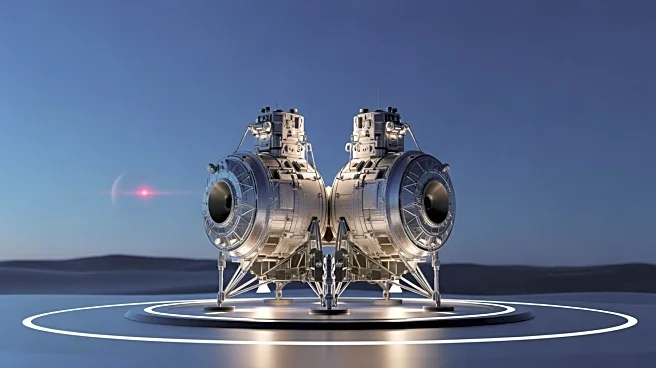
NASA has launched the ESCAPADE mission, consisting of twin spacecraft, to study the loss of Mars' atmosphere and the impact of solar wind. The mission aims to understand how Mars transformed from a warm, wet planet to its current cold, dry state. The spacecraft will
analyze the planet's magnetosphere and atmospheric conditions, providing insights into the processes that led to atmospheric erosion. This mission is part of NASA's efforts to prepare for future human exploration of Mars by understanding space weather and radiation exposure.
Why It's Important?
The ESCAPADE mission is crucial for advancing knowledge about Mars' atmospheric history and its current environmental conditions. Understanding the solar wind's role in atmospheric loss can inform strategies to protect future astronauts from radiation during Mars missions. The data collected will also contribute to the development of space weather protocols, enhancing safety for human and robotic explorers. This mission represents a significant step in Mars exploration, potentially paving the way for human settlement and scientific discovery on the Red Planet.
What's Next?
The twin spacecraft will continue their journey to Mars, expected to arrive in September 2027. They will initially follow a shared orbital path before diverging to study different aspects of Mars' magnetosphere. The mission will provide real-time data on solar wind interactions, aiding in the development of protective measures for future Mars missions. As the spacecraft gather information, scientists will refine models of Mars' atmospheric dynamics, contributing to the broader understanding of planetary science and exploration.