







What's Happening?
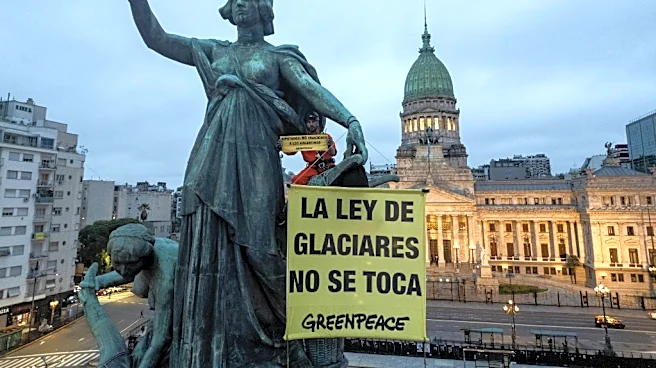
Argentina has reformed its pioneering glacier law, which originally protected glaciers and surrounding periglacial areas from industrial activities. The reform, driven by the government of Javier Milei, allows provincial authorities to decide which glaciers are protected based
on their 'relevant water function.' This change aims to attract international investment in mining, particularly for minerals essential to the energy transition. However, environmentalists and activists argue that the reform undermines environmental protections and threatens key water reserves.
Why It's Important?
The reform of Argentina's glacier law highlights the tension between economic development and environmental conservation. While the government seeks to boost the economy by attracting mining investments, the changes could have significant environmental impacts, particularly on water resources. Glaciers are crucial for maintaining water supplies and ecological balance, especially in regions affected by climate change. The reform has sparked protests and raised concerns about the long-term sustainability of Argentina's natural resources and the potential consequences for communities dependent on glacier-fed water sources.
What's Next?
The reform is likely to face continued opposition from environmental groups and local communities. Legal challenges and public protests may arise as stakeholders push for stronger environmental protections. The government may need to balance economic interests with environmental sustainability to address these concerns. The outcome of this reform could influence future environmental policies in Argentina and other countries facing similar challenges. International attention may also focus on Argentina's approach to balancing economic growth with environmental stewardship.