



What's Happening?
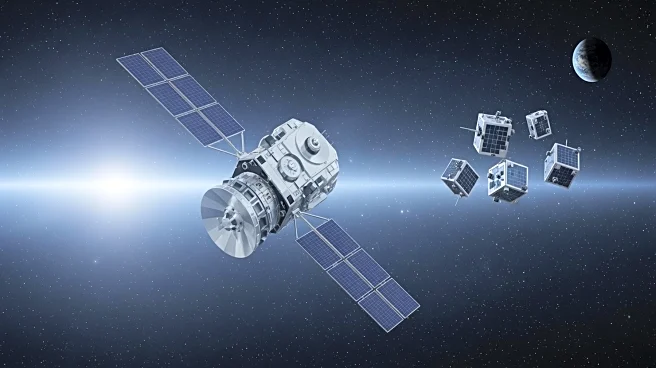
NASA is preparing to launch its Pandora small satellite as part of the Twilight rideshare mission with SpaceX. Scheduled to launch aboard a Falcon 9 rocket from Vandenberg Space Force Base in California, Pandora will study exoplanet atmospheres and their
stars. The mission aims to examine at least 20 exoplanets, building on discoveries from the James Webb Space Telescope, Kepler, and TESS. Pandora will conduct long, continuous observations to determine the presence of hazes, clouds, or water in exoplanet atmospheres. Alongside Pandora, two NASA-sponsored CubeSats, SPARCS and BlackCAT, will also launch. SPARCS, led by Arizona State University, will study coronal mass ejections on small stars, while BlackCAT, developed by Pennsylvania State University, will observe X-ray flares from active galaxies and gamma-ray bursts. These missions are part of NASA's CubeSat Launch Initiative, providing a low-cost pathway for scientific investigations and technology demonstrations in space.
Why It's Important?
The Pandora mission and accompanying CubeSats represent significant advancements in space exploration and research. By studying exoplanet atmospheres, Pandora will enhance our understanding of these distant worlds, potentially identifying conditions that could support life. The data collected will also aid in interpreting measurements from the James Webb Space Telescope and future missions. The CubeSats, SPARCS and BlackCAT, will contribute to our knowledge of stellar activity and cosmic phenomena, such as gamma-ray bursts and X-ray flares, which are crucial for understanding the universe's evolution. These missions also support the growth of the U.S. commercial launch market and provide valuable hands-on experience for students and researchers in developing space technology.
What's Next?
Following the launch, Pandora and the CubeSats will begin their respective missions in low Earth orbit. Pandora will focus on continuous observations of exoplanets, while SPARCS and BlackCAT will conduct their studies on stellar and cosmic phenomena. The data collected will be analyzed to provide insights into exoplanetary atmospheres and cosmic events. The success of these missions could lead to further collaborations and advancements in space exploration, potentially influencing future NASA missions and commercial space endeavors.