








What's Happening?
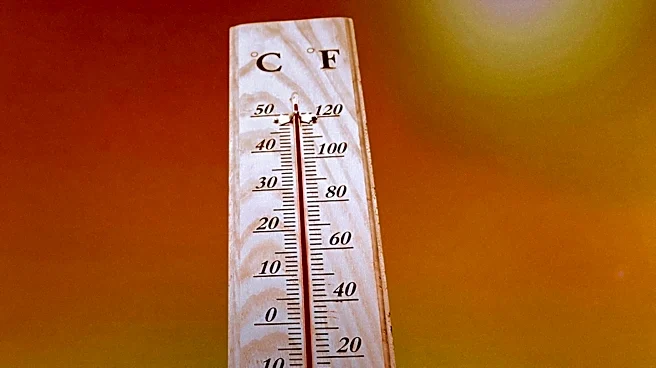
A significant heat wave is expected to affect more than 100 million Americans this week, with dangerous temperatures spanning from Los Angeles to Boston. The National Weather Service has issued heat advisories and warnings across various regions, including
the Northeast, Midwest, and parts of the West. Cities such as Salt Lake City and Billings have already experienced record-breaking temperatures, with Salt Lake City reaching 109 degrees Fahrenheit and Billings hitting 111 degrees. The heat wave is driven by a heat dome over the Northern Plains, causing extreme heat and humidity. In the Northeast, cities like New York City, Philadelphia, and Washington D.C. are expected to see temperatures over 90 degrees for several consecutive days. The heat index in these areas could reach up to 105 degrees, prompting advisories for Tuesday and Wednesday.
Why It's Important?
The widespread heat wave poses significant health risks, particularly for vulnerable populations such as the elderly and those with pre-existing health conditions. High temperatures and humidity increase the likelihood of heat-related illnesses, including heat exhaustion and heat stroke. The economic impact could also be substantial, as increased energy demand for air conditioning may strain power grids and lead to higher utility costs. Additionally, the agricultural sector may face challenges due to the extreme heat, potentially affecting crop yields and livestock. The heat wave underscores the growing concerns about climate change and its role in increasing the frequency and intensity of extreme weather events.
What's Next?
As the heat wave progresses, local governments and emergency services are likely to implement measures to mitigate its impact, such as opening cooling centers and issuing public health advisories. Residents are advised to stay hydrated, limit outdoor activities during peak heat hours, and check on vulnerable neighbors. Meteorologists will continue to monitor the situation, providing updates and warnings as necessary. The potential for severe storms in northern New England, fueled by the heat and a cold front, could lead to additional weather-related challenges, including destructive winds and hail.