
What's Happening?
Congressman Chris Pappas (NH-01), Congresswoman Nikki Budzinski (IL-13), and Congressman Raja Krishnamoorthi (IL-08), alongside 97 other colleagues, have urged Postmaster General David P. Steiner to revoke a Postal Service rule. This rule codifies President
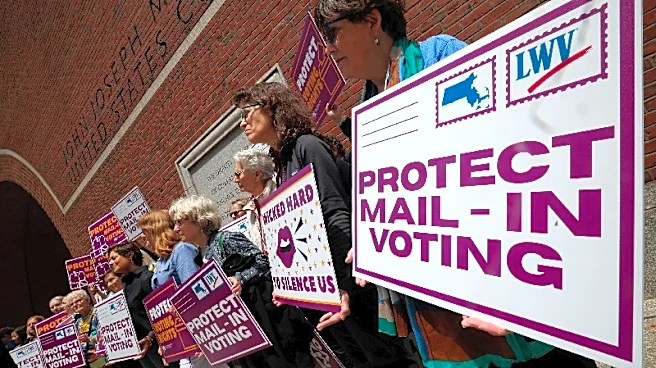
Trump’s Executive Order 14399, which aims to control mail-in ballots ahead of the 2026 midterm elections. The lawmakers expressed concerns that the rule risks harming the democratic process and damaging the USPS's relationship with millions of Americans who rely on mail-in voting. They argue that the order imposes unconstitutional and unworkable restrictions, including requiring states to provide a 'citizenship verification list' and attempting to give USPS control over who can vote by mail. A 2025 Brookings Institution study found an average of just four cases of voter fraud for every 10 million mail-in ballots cast, indicating that states using universal mail-in voting have among the lowest fraud rates.
Why It's Important?
This action is significant because it directly challenges an executive order that could impact the integrity and accessibility of U.S. elections. Mail-in voting has become a critical component of the electoral process, with one-third of Americans expected to vote by mail in the upcoming midterm elections. The lawmakers' intervention highlights a fundamental debate over federal versus state authority in election administration, as they argue the order violates the separation of powers and usurps congressional authorities outlined in Article I of the U.S. Constitution. The potential disruption to USPS operations and the creation of new obstacles for voters could erode public trust in the electoral process, making this a crucial effort to safeguard voting rights and democratic principles.
What's Next?
The call to revoke the Postal Service rule sets the stage for potential legal and political battles. The lawmakers have already joined a bipartisan coalition in filing an amicus brief to the Supreme Court of the United States, challenging the legality of President Trump’s Executive Order 14399. A recent federal court ruling has already blocked the USPS from implementing its newly finalized mail ballot rule for the midterm elections, citing the agency's lack of authority and the unconstitutional nature of its actions. The ongoing legal challenges and the pressure from congressional members will likely determine the fate of this rule, with potential reactions from political leaders, civil society groups, and the judiciary shaping the future of mail-in voting regulations.
Beyond the Headlines
Beyond the immediate legal and political implications, this issue touches upon deeper ethical and cultural dimensions concerning voter access and trust in democratic institutions. The debate over mail-in voting often becomes intertwined with broader discussions about election security and partisan interests, potentially exacerbating political polarization. The lawmakers' emphasis on the low incidence of voter fraud in mail-in ballots, as supported by the Brookings Institution study, underscores the importance of evidence-based policymaking in election administration. The outcome of this challenge could set precedents for how future executive orders interact with established constitutional authorities and influence public perception of the fairness and accessibility of the U.S. electoral system.