





What's Happening?
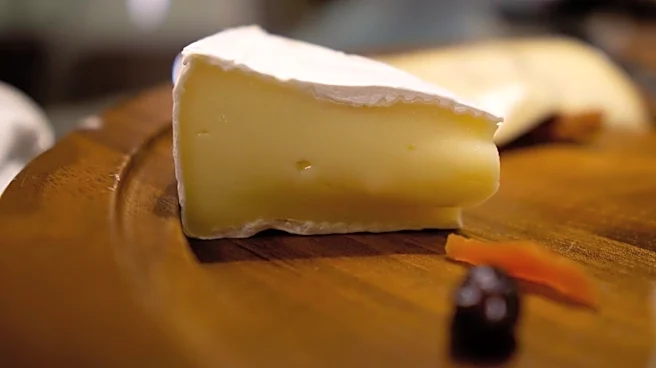
The U.S. Food and Drug Administration (FDA) has reported a recall of Mon Sire Brie, a soft-ripened French cheese, in Florida due to potential Listeria monocytogenes contamination. Optimus Inc., operating as Markys Caviar, initiated the recall, which covers
two lots of 1-kilogram cheeses distributed within Florida. The affected lots are 00000ZRAA1, expiring August 15, 2026, and 00000ZUAD2, expiring August 18, 2026. This U.S. action follows earlier recalls of the same brand in Australia and New Zealand in early September, although those international recalls involved different dates and have not been publicly linked to a single confirmed source. While the expiration dates for the recalled Florida products have passed, there is still a concern for cheese remaining in home refrigerators or freezers. The FDA has not yet classified the hazard level for this specific recall, and no illnesses linked to the Florida product have been reported.
Why It's Important?
The recall of Mon Sire Brie due to Listeria contamination is a significant public health concern, particularly for vulnerable populations. Listeria monocytogenes can cause serious illness, especially in pregnant individuals, newborns, adults aged 65 and older, and those with weakened immune systems. For pregnant people, infection can lead to miscarriage, stillbirth, premature delivery, or life-threatening infections in newborns. In other high-risk groups, severe illness can manifest as headache, stiff neck, confusion, loss of balance, or convulsions. The fact that Listeria can survive freezing and multiply at refrigerator temperatures makes proper disposal and thorough cleaning of contaminated surfaces crucial to prevent cross-contamination. This incident underscores the ongoing challenges in ensuring food safety, especially with imported products that move through complex international distribution networks, and highlights the need for continuous vigilance from both consumers and food businesses.
What's Next?
Consumers in Florida who possess Mon Sire Brie from the recalled lots are advised to immediately discard the product or return it to the place of purchase for a refund. Due to Listeria's ability to survive freezing, any frozen portions should also be discarded. It is also critical for households, delis, and restaurants that handled the recalled cheese to thoroughly clean and sanitize refrigerator shelves, drawers, containers, and any surfaces or utensils that came into contact with the product using hot, soapy water. The FDA will continue to monitor the situation, and a classification of the recall's hazard level may be issued. While no illnesses have been reported in Florida, individuals in high-risk groups who may have consumed the cheese are encouraged to contact a clinician, even if asymptomatic, as symptoms can appear weeks after exposure. The international pattern of recalls for the same brand suggests a need for ongoing investigation into the source of contamination.
Beyond the Headlines
This recall extends beyond immediate food safety concerns, touching upon the complexities of global food supply chains and the challenges of harmonizing food safety standards across borders. The occurrence of similar recalls for Mon Sire Brie in Australia and New Zealand, albeit with different dates, raises questions about potential systemic issues in the production or handling of this specific brand. While no direct link has been confirmed, it highlights the interconnectedness of the global food market and the potential for localized issues to have international implications. The incident also serves as a reminder of the importance of robust import controls and the need for continuous collaboration between international food safety authorities. For consumers, it reinforces the message that even premium or imported food products are not immune to contamination risks, emphasizing the importance of staying informed about food recalls and practicing safe food handling at home.