



What's Happening?
Jorge Heine, former Research Professor at the Pardee School of Global Studies and Chilean ambassador to China, is advocating for Latin American countries to adopt a more independent foreign policy stance. This call comes as the strategic competition between
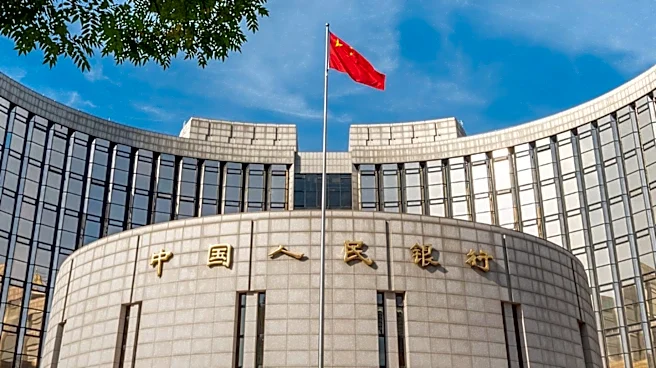
the United States and China intensifies, reshaping global politics. In an interview with The China-Global South Project (CGSP), Heine highlighted the growing pressure on governments in the Western Hemisphere to align with Washington, even as China expands its role as the region's primary trade and investment partner. Many Latin American governments increasingly view China as a significant source of investment, trade, and economic opportunities. Conversely, U.S. policy is often associated with tariffs, sanctions, and protectionist measures. Despite Washington's efforts to deter Chinese involvement in critical sectors like technology and infrastructure, economic realities continue to draw Latin American nations towards deeper engagement with Asia. Heine emphasizes that China has become an undeniable factor for Latin American policymakers in what he terms the 'Asian century,' noting a dramatic shift in public opinion, with China now surpassing the United States in standing in countries like Chile.
Why It's Important?
This development is crucial for U.S. foreign policy and economic interests in Latin America. The increasing influence of China in the region, driven by economic incentives, challenges the traditional U.S. dominance and could lead to a re-evaluation of alliances and trade relationships. If Latin American countries adopt an 'active non-alignment' approach, as suggested by Heine, it could diminish the effectiveness of U.S. efforts to counter China's expansion in the hemisphere. This shift could impact U.S. businesses seeking to invest or operate in Latin America, potentially facing increased competition from Chinese enterprises or navigating a more complex regulatory environment influenced by diverse international partners. Furthermore, a more independent Latin America could alter regional security dynamics and diplomatic alignments, requiring the U.S. to adapt its engagement strategies. The perception of U.S. policy as protectionist, contrasted with China's image as an economic partner, could further erode U.S. standing and influence, affecting long-term strategic objectives in the region.
What's Next?
Latin American countries are expected to continue navigating the complex geopolitical landscape, potentially adopting more nuanced foreign policies that prioritize their economic interests. This could involve strengthening trade and investment ties with China while maintaining diplomatic relations with the United States. The U.S. may need to adjust its approach to Latin America, possibly by offering more competitive economic incentives or re-evaluating its trade and sanction policies to counter China's growing appeal. Discussions around 'active non-alignment' are likely to gain traction among Latin American leaders, leading to increased regional cooperation and a more unified stance on international issues. The region's abundant natural resources, including copper, lithium, and agricultural products, position it to leverage its economic potential in emerging green and digital industries, further influencing its foreign policy decisions. The challenge for these nations will be to move beyond raw material exports and develop higher-value production, fostering greater economic autonomy.
Beyond the Headlines
The concept of 'active non-alignment' proposed by Jorge Heine carries deeper implications for global power dynamics and the future of international relations. It suggests a move away from a bipolar or unipolar world order towards a more multipolar system where smaller and medium-sized powers assert greater independence. For Latin America, this approach could foster a stronger sense of regional identity and collective bargaining power on the global stage. Ethically, it raises questions about the responsibilities of great powers in their engagement with developing nations, particularly regarding economic coercion versus mutually beneficial partnerships. Culturally, increased engagement with diverse global partners could lead to a richer exchange of ideas and practices, potentially influencing social and political developments within Latin American countries. The long-term shift could see Latin America becoming a more significant and autonomous player in global affairs, challenging established norms and requiring a re-evaluation of traditional geopolitical frameworks.