






What's Happening?
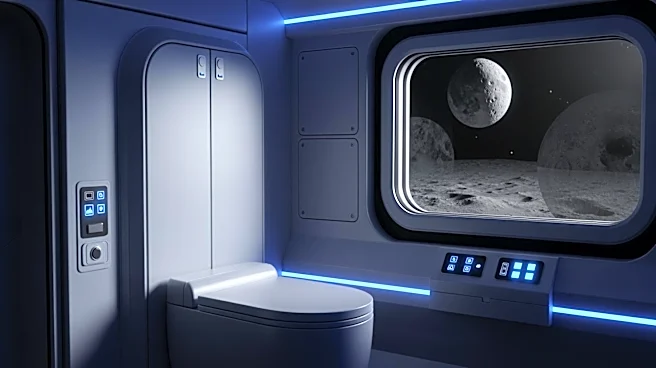
The Artemis II crew recently shared their experiences dealing with toilet malfunctions during their mission around the moon. The plumbing issues became apparent from the first day of the mission, with the system's fan initially causing problems. Later,
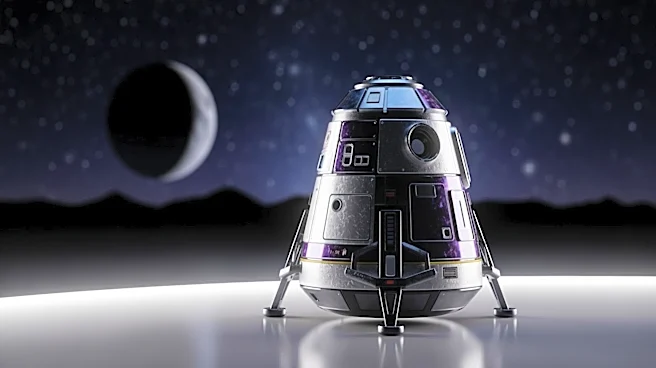
the vent line that disposes of waste into space froze, preventing the tank from emptying. NASA flight controllers managed to resolve the issue by re-orienting the Orion capsule to allow sunlight to warm the vent, thus reducing the clog. During a town hall, mission specialist Christina Koch explained that the crew used backup methods, specifically 'contingency collapsible urinals' (CCUs), to maintain hygiene. These plastic containers allowed urine to be collected and vented into space later. Each crew member had two CCUs, which replaced about 25 pounds of diapers.
Why It's Important?
The Artemis II mission is a significant step in NASA's efforts to return humans to the moon and eventually send astronauts to Mars. The challenges faced by the crew highlight the importance of robust engineering and contingency planning in space missions. The ability to adapt to unexpected situations, such as toilet malfunctions, is crucial for the success and safety of long-duration spaceflights. This incident underscores the need for reliable life-support systems and the development of innovative solutions to ensure astronaut well-being. The mission's success in overcoming these challenges also boosts public confidence in NASA's capabilities and the feasibility of future deep-space exploration.
What's Next?
As NASA continues to prepare for future Artemis missions, including the eventual goal of landing astronauts on Mars, the lessons learned from Artemis II will inform the design and operation of spacecraft systems. Engineers will likely focus on improving the reliability of life-support systems, including waste management, to prevent similar issues in future missions. The feedback from the Artemis II crew will be invaluable in refining these systems. Additionally, NASA will continue to engage with the public and educational institutions to inspire interest in space exploration and STEM fields.