






What's Happening?
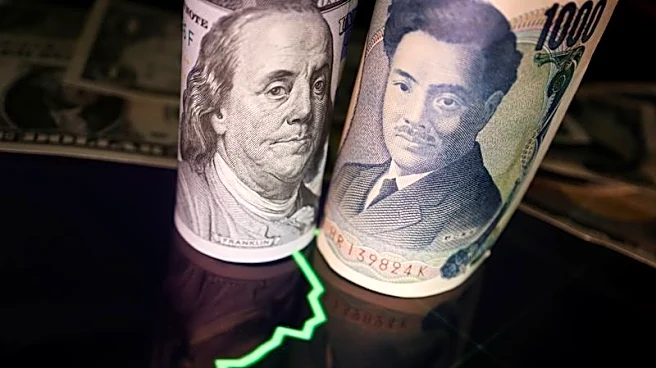
The U.S. dollar weakened against the Japanese yen following a joint intervention by President Trump and Japan's finance minister. The intervention aimed to address the yen's prolonged weakness, which has been exacerbating Japan's import costs and inflation.
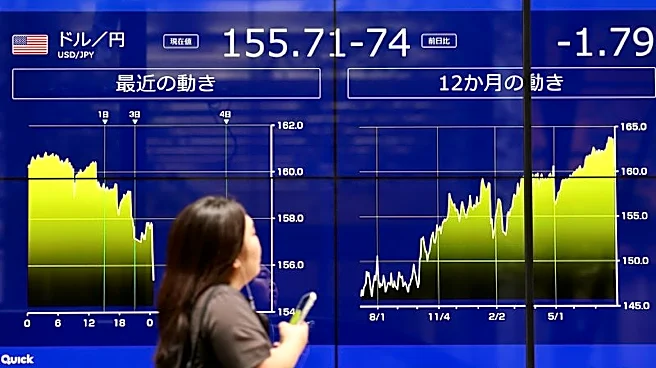
The dollar, which had been trading at 163 yen, fell to 155.20 yen after the intervention. This move is part of efforts to stabilize the yen and alleviate economic pressures on Japan, which imports a significant portion of its consumption. The intervention is notable for its rarity and the explicit acknowledgment by both U.S. and Japanese officials.
Why It's Important?
The intervention highlights the strategic economic relationship between the U.S. and Japan. A weaker yen has been increasing Japan's cost of living, particularly due to high oil prices. By supporting the yen, the U.S. not only aids a key ally but also potentially benefits from increased competitiveness of U.S. goods in Japan. This move could enhance American exports and strengthen economic ties. However, the intervention also underscores the challenges of managing currency values amid global economic uncertainties and differing monetary policies.
What's Next?
The intervention's success will depend on ongoing economic conditions, including interest rate policies and global market dynamics. Japan's Prime Minister Sanae Takaichi may face pressure to implement further economic measures, such as tax cuts or increased spending, to support the yen. The Bank of Japan's cautious approach to interest rate changes will also play a critical role in the yen's future stability. Continued collaboration between the U.S. and Japan may be necessary to address these complex economic challenges.