








What's Happening?
The Colombian government, under President Gustavo Petro, is advocating for early closure discussions regarding the Cerrejon coal mine, operated by Glencore. This move is part of Colombia's broader strategy to transition away from fossil fuel dependency,
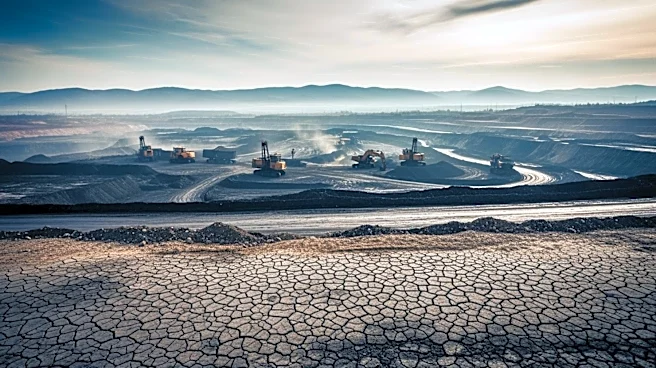
as the government has prohibited new exploration contracts for hydrocarbons and minerals. The Cerrejon mine, one of the largest open-pit coal export operations globally, is central to the economy of La Guajira, a region heavily reliant on coal. The mine's production has been declining, with a 12.5% drop from 2024 to 2025, indicating a managed decline strategy. The government is pushing for a tripartite transition committee involving Glencore, local communities, and government authorities to plan for the region's economic transition well before the mine's concession expires in 2034.
Why It's Important?
The early closure talks are significant as they reflect Colombia's commitment to reducing its reliance on fossil fuels and addressing climate change. The Cerrejon mine is a major economic driver in La Guajira, and its closure without a proper transition plan could lead to economic instability, unemployment, and social challenges. The government's proactive approach aims to mitigate these risks by ensuring that workforce retraining, clean energy investments, and economic diversification are in place. This situation also highlights the tension between corporate interests and government policies in managing the transition from coal, with potential implications for Glencore's operations and investor perceptions of regulatory risks in Colombia.
What's Next?
The Colombian government has invited Glencore to engage in discussions through a proposed tripartite committee to manage the transition process. The outcome of these talks will be crucial in determining the future economic landscape of La Guajira. If Glencore agrees to participate, it could set a precedent for how similar transitions are managed globally. However, if Glencore declines, the government may face challenges in implementing its transition strategy, potentially leading to legal and political disputes. The situation will be closely monitored by investors and stakeholders interested in the region's economic stability and environmental commitments.
Beyond the Headlines
The closure of the Cerrejon mine raises broader questions about the role of indigenous communities in transition planning. The Wayuu people, who have been affected by the mine's operations, must be meaningfully included in the decision-making process to ensure their rights and livelihoods are protected. Additionally, the situation underscores the complexities of balancing economic development with environmental sustainability and social equity. The Colombian government's approach could serve as a model for other countries facing similar challenges in transitioning away from fossil fuels.