





What's Happening?
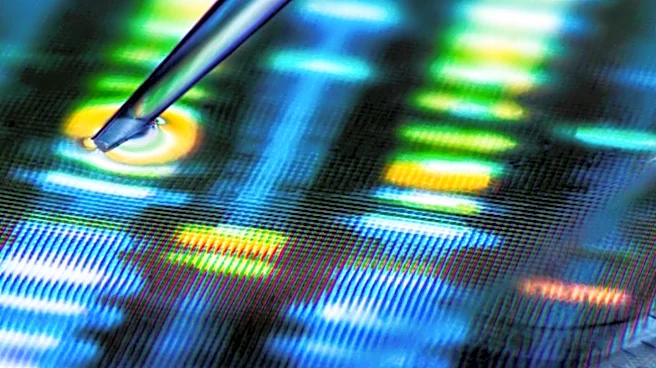
Scientists are utilizing biotechnological tools to investigate the functions of individual Neanderthal and Denisovan genes. This research involves inserting Neanderthal or Denisovan gene versions into mice or cell cultures to observe differences in growth
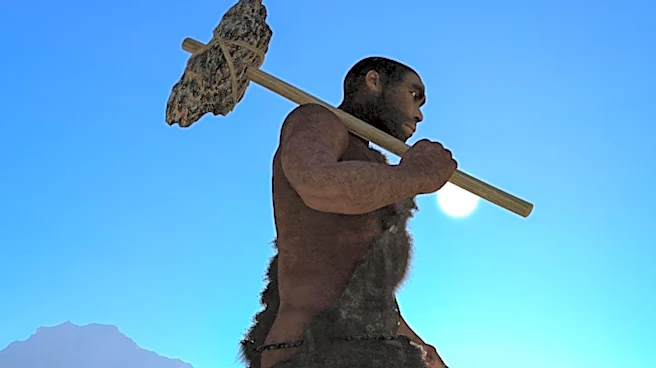
or behavior. These studies aim to further elucidate the roles of these ancient genes, with initial findings indicating their involvement in immunity, circadian rhythms, and anatomy. The Neanderthal genome, sequenced in 2010, revealed that Neanderthals did not entirely die out but were absorbed into modern human populations, contributing approximately 2% of the DNA in present-day individuals of non-African descent. Similarly, Denisovans also interbred with humans. The Homo sapiens genome is also believed to contain 'ghost lineages' from other unknown ancestors, suggesting a more complex evolutionary history than previously understood. This ongoing research challenges earlier narratives of human evolution, which often depicted other hominins as primitive and destined for extinction.
Why It's Important?
This research is crucial for understanding the intricate evolutionary history of Homo sapiens and the lasting genetic legacy of our ancient relatives. By identifying the specific functions of Neanderthal and Denisovan genes, scientists can gain insights into how these genetic contributions might have influenced the development and adaptation of modern humans. For instance, understanding their role in immunity could shed light on our susceptibility or resistance to certain diseases. The findings also reshape our perception of human uniqueness, highlighting that our species was not the sole advanced hominin. This broader perspective on human origins can inform discussions about human resilience, adaptation, and the factors that led to Homo sapiens becoming the sole surviving human species. It also underscores the interconnectedness of different hominin groups through interbreeding, which has left an indelible mark on our genetic makeup.
What's Next?
Future research will continue to delve deeper into the functional aspects of Neanderthal and Denisovan genes, with ongoing studies expected to provide more detailed insights into their impact on various biological processes. Scientists will likely explore how these ancient genes interact with modern human genes and environmental factors. The field will also continue to investigate the 'ghost lineages' within the Homo sapiens genome, potentially uncovering more unknown ancestral contributions. This ongoing work will further refine our understanding of human evolution, challenging existing assumptions and providing a more nuanced picture of our past. The integration of genetic data with archaeological and paleontological evidence will be key to piecing together the complex narrative of human origins and the interactions between different hominin species.
Beyond the Headlines
The exploration of Neanderthal and Denisovan genetic contributions extends beyond mere biological curiosity, touching upon profound questions about human identity and our place in the natural world. It challenges the long-held notion of a linear, progressive human evolution, instead presenting a more complex 'tangled bush' model where multiple hominin species coexisted and interbred. This understanding can foster a greater appreciation for the diversity of human forms and capabilities that once existed. Ethically, it prompts reflection on how we define 'human' and the implications of shared ancestry with other hominin groups. Culturally, it enriches our narrative of human origins, moving away from a triumphalist view of Homo sapiens as uniquely superior to a more interconnected and shared evolutionary journey. This deeper historical perspective can also inform contemporary discussions about human resilience and adaptability in the face of global challenges.