




What's Happening?
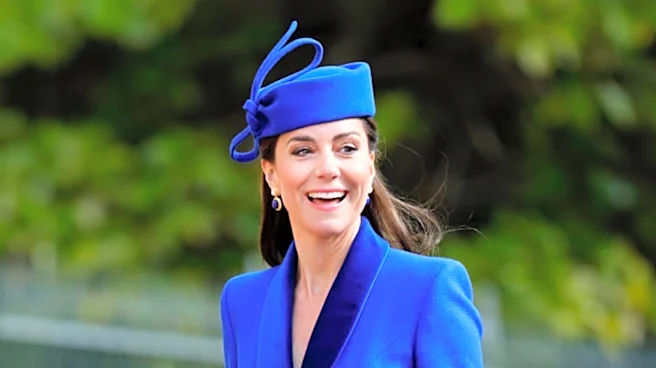
Kate Middleton, the Princess of Wales, recently visited The Chase Community Hospital in Bordon, England, to learn about a project supported by the Royal Foundation Centre for Early Childhood, which she founded. During her visit, the Princess engaged with
babies, their families, and hospital staff. She highlighted the importance of understanding how babies communicate to strengthen early relationships and ensure timely support for families. The Princess specifically praised the Alarm Distress Baby Scale (ADBB) in practice, noting its effectiveness in helping health visitors give babies a voice. She shared photos and videos from her visit on social media, explaining the research behind the initiative and emphasizing how a greater understanding of babies' social behavior can provide crucial support.
Why It's Important?
This initiative by the Princess of Wales underscores a growing recognition of the critical role of early childhood development in long-term societal well-being. By focusing on early communication and intervention, the program aims to address developmental challenges at their nascent stages, potentially reducing the need for more intensive support later in life. This approach can lead to healthier family dynamics, improved educational outcomes for children, and a reduction in public health and social service expenditures. The Princess's involvement brings significant public attention to these issues, encouraging broader societal engagement and investment in early childhood programs. The emphasis on observational approaches like ADBB highlights a shift towards more nuanced and responsive care for infants and their families.
What's Next?
The Royal Foundation Centre for Early Childhood is expected to continue its work in promoting and supporting initiatives like the Alarm Distress Baby Scale. Increased awareness generated by the Princess's visit may lead to wider adoption of such observational tools in healthcare settings across the UK. Future efforts will likely focus on expanding training for health visitors and other childcare professionals in these methods, ensuring more families can benefit from early intervention. The Princess's ongoing advocacy will likely encourage further research and funding into early childhood development, potentially influencing public policy and healthcare practices to prioritize infant communication and support systems.
Beyond the Headlines
The Princess of Wales's engagement with early childhood development extends beyond mere public appearances; it reflects a deeper commitment to fostering a society that prioritizes the foundational years of life. This focus has ethical implications, as it champions the right of every child to a healthy start and the opportunity to thrive. Culturally, it reinforces the value of parental and caregiver responsiveness, shifting the narrative towards proactive support rather than reactive crisis management. Long-term, such initiatives could contribute to a more resilient and equitable society by addressing disparities in early development and providing a stronger base for future generations. It also highlights the evolving role of the monarchy in addressing contemporary social issues.