






What's Happening?
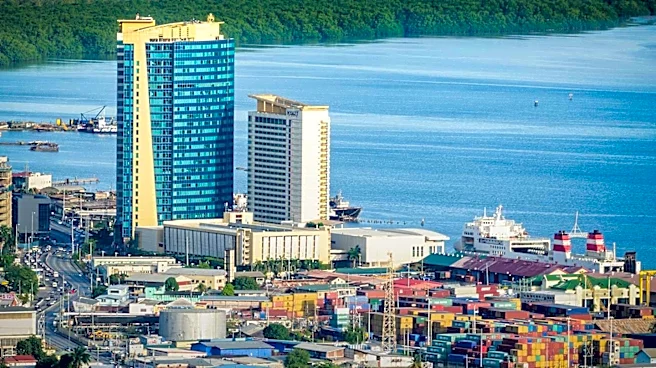
Economist Dr. Anthony Gonzales has provided insights into the complex and strained relationship between Venezuela and Trinidad and Tobago, particularly in the context of an alleged oil spill and ongoing energy deals. According to Dr. Gonzales, while the current
Venezuelan regime may harbor resentment towards Trinidad and Tobago, they are pragmatic and will continue to engage in energy agreements, such as the recent deal with Shell to extract natural gas from the Loran field. This gas, totaling 1.7 trillion cubic feet, is slated for export to Trinidad and Tobago via the Shell-owned Manatee platform. Dr. Gonzales suggests that Venezuela's actions, including raising the oil spill issue and not entertaining ministerial visits, are signals of their displeasure, indicating that the relationship is unlikely to progress beyond transactional government-to-government matters. This comes amidst claims from Venezuela of a second major oil spill originating from Trinidadian waters, which Trinidad's state-owned Heritage Petroleum company has stated lacks evidence.
Why It's Important?
The analysis by Dr. Anthony Gonzales highlights the delicate balance between geopolitical tensions and economic pragmatism in the Caribbean region. The continued engagement in energy deals despite diplomatic friction underscores the mutual economic dependency between Venezuela and Trinidad and Tobago, particularly in the hydrocarbon sector. For the U.S., this situation is important as it reflects the broader regional realignments and the impact of U.S. foreign policy. Trinidad and Tobago's shift towards a pro-Washington stance, as noted by security consultant Dr. Garvin Heerah, has direct consequences on its relationship with Venezuela. The potential for criminal elements to exploit diplomatic hostilities, leading to increased drug trafficking and other illicit activities in the Southern Caribbean maritime corridor, poses a significant security concern for the entire Western Hemisphere, including the U.S. The environmental dimension, with the Gulf of Paria being a shared liability for both nations, also presents long-term ecological and economic risks for the region.
What's Next?
The immediate future will likely see continued pragmatic engagement on energy deals between Venezuela and Trinidad and Tobago, driven by mutual economic benefits, as suggested by Dr. Gonzales. However, the diplomatic frostiness is expected to persist, with Venezuela likely to continue using issues like the alleged oil spill as a diplomatic instrument to express displeasure. The lack of formal diplomatic channels and intelligence-sharing protocols between the two nations could lead to an escalation of incidents, such as disputes over detained vessels or intercepted officials, as warned by Dr. Heerah. This environment of heightened tension and reduced cooperation could further empower transnational criminal organizations operating in the Southern Caribbean. Both nations will need to navigate the complexities of their relationship while balancing economic interests with geopolitical alignments, potentially under the continued scrutiny and influence of U.S. policy in the region.
Beyond the Headlines
Beyond the immediate diplomatic and economic implications, the situation between Venezuela and Trinidad and Tobago reveals deeper issues of regional governance and environmental responsibility. The Gulf of Paria, a shared ecological and economic asset, is becoming a shared liability due to repeated hydrocarbon contamination. The absence of a functioning bilateral environmental monitoring and response protocol means that future incidents will likely be managed reactively, through accusations rather than cooperative mechanisms. This highlights a critical gap in regional environmental governance, especially given that both economies are structurally dependent on hydrocarbon extraction. The long-term degradation of marine ecosystems, such as coral reefs and mangrove habitats, will have severe consequences for commercial fish stocks and the livelihoods of thousands of small-scale fishers, creating socio-economic instability. The current geopolitical climate has comprehensively destroyed the bilateral trust necessary for effective long-term management of shared resources and risks, underscoring the ethical and practical challenges of balancing national interests with regional environmental stewardship.