

What's Happening?
President Donald Trump has announced plans to impose a 10% tariff on goods from several European countries, including Denmark, Norway, Sweden, France, Germany, the UK, the Netherlands, and Finland, starting February 1. This move is part of an effort to pressure
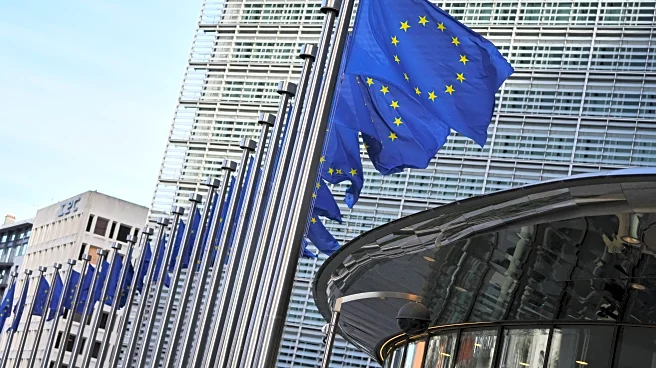
Denmark into selling Greenland to the United States. The tariffs are set to increase to 25% by June 1 if a deal is not reached. French Agriculture Minister Annie Genevard has warned that these tariffs could be detrimental to both the United States and Europe, potentially harming American farmers and industrialists. The European Union is preparing to respond to what it perceives as economic blackmail, with an extraordinary meeting of EU ambassadors scheduled to discuss the situation.
Why It's Important?
The proposed tariffs by President Trump could significantly impact trans-Atlantic relations and economic stability. The tariffs threaten to derail a trade deal between the EU and the US, potentially leading to economic repercussions for industries on both sides. European leaders have expressed strong opposition, indicating that the EU may retaliate with its own trade measures. This situation highlights the complexities of international trade negotiations and the potential for economic policies to strain diplomatic relations. The outcome of this dispute could set a precedent for future trade negotiations and influence global economic policies.
What's Next?
The European Union is expected to present a united front in response to the US tariffs. An extraordinary meeting of EU ambassadors has been called to discuss potential retaliatory measures. The EU may consider freezing its trade deal with the US and employing its 'trade bazooka' policy as a countermeasure. The situation is likely to escalate if no agreement is reached regarding Greenland, potentially leading to a trade war. Stakeholders in both the US and Europe will be closely monitoring developments, as the economic implications could be significant.
Beyond the Headlines
The proposed tariffs raise questions about the ethical implications of using economic pressure to achieve geopolitical goals. The idea of purchasing Greenland has been met with skepticism and criticism, highlighting the challenges of balancing national security interests with international diplomacy. The situation also underscores the importance of multilateral cooperation in addressing global issues, as unilateral actions can lead to unintended consequences and increased tensions among nations.