
What's Happening?
China is actively working to reshape global governance by leveraging existing international institutions rather than creating new ones. This strategy was highlighted in a recent white paper published by China's
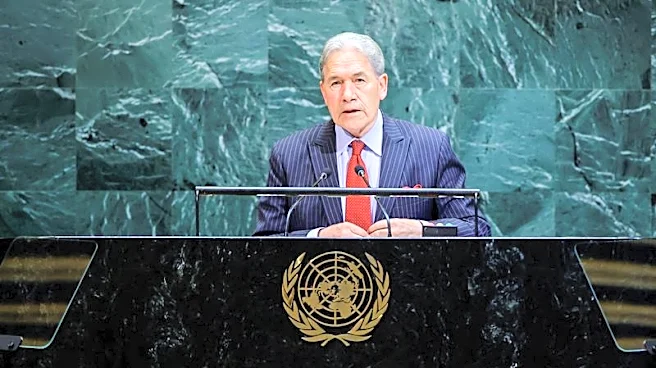
State Council Information Office, which emphasizes the importance of upholding the international system with the United Nations at its core. China is focusing on principles such as sovereign equality, noninterference, and state-led development, while creating new platforms like the World Artificial Intelligence Cooperation Organization (WAICO) to operationalize these principles. This approach allows China to influence global governance by reweighting existing principles and creating China-led venues for international cooperation.
Why It's Important?
China's approach to global governance has significant implications for the international order. By working within existing institutions, China can exert influence without directly challenging the current system, potentially leading to shifts in global power dynamics. This strategy allows China to promote its vision of governance, which emphasizes state sovereignty and noninterference, potentially appealing to other countries, particularly in the Global South. China's actions could lead to changes in how international norms and rules are interpreted and applied, affecting global governance on issues such as development, security, and technology. Understanding China's strategy is crucial for assessing its impact on the future of international relations.
Beyond the Headlines
China's strategy of reform without rupture highlights the complexity of global governance. By emphasizing sovereign equality and noninterference, China positions itself as both a major power and an advocate for developing countries. This dual role allows China to challenge existing hierarchies while promoting its vision of international relations. However, this approach also raises questions about the balance between state sovereignty and individual rights, as well as the role of international law in constraining great powers. China's actions may lead to a redefinition of global governance norms, with potential long-term implications for international cooperation and conflict resolution.