







What's Happening?
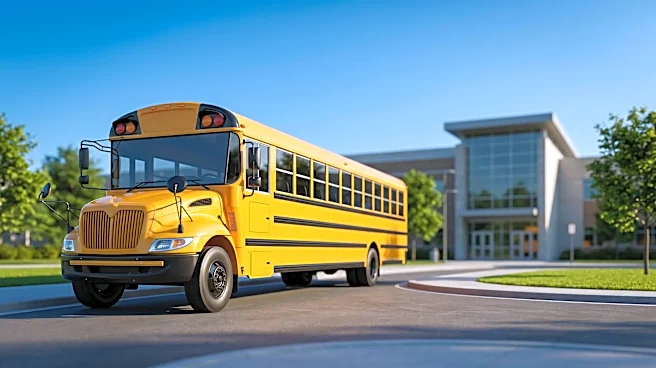
Blue Valley Schools in Overland Park, Kansas, is offering a limited opportunity for middle and high school students residing within 2.5 miles of their schools to apply for paid bus transportation. This distance is typically considered a non-busing zone.
Due to limited capacity on existing routes, available seats will be allocated through a lottery system. The registration portal for this program opened at noon on Monday, August 24, and will close at 5 p.m. on Thursday, August 27. Approved bus service for selected students is scheduled to commence after Labor Day. The program specifies that no new routes or bus stops will be created, and Durham School Services will assign students to the closest existing stop, which may require some students to walk further. A full refund will be issued to families whose students cannot be accommodated due to lack of space.
Why It's Important?
This initiative by Blue Valley Schools is significant for several reasons. It addresses a common challenge faced by families living within the non-busing zone, who often struggle with transportation logistics for their children. By offering paid busing, the district aims to alleviate some of the burden on parents, potentially improving student attendance and punctuality. The lottery system, while necessary due to limited capacity, highlights the high demand for such services and the ongoing need for efficient student transportation solutions in suburban areas. This program could also reduce traffic congestion around schools, contributing to safer environments for students. However, the limitation to existing routes and the potential for students to walk further to assigned stops indicate that this is a partial solution, underscoring the complexities of school transportation planning and resource allocation.
What's Next?
Families interested in the paid busing program must register by the August 27 deadline to be included in the lottery. Following the lottery, students who are accommodated will begin bus service after Labor Day. Families registering after the deadline will only be considered on a first-come, first-served basis if space becomes available. The success and demand for this program will likely be evaluated by Blue Valley Schools, which could influence future transportation policies or the expansion of similar initiatives. Stakeholders, including parents and school administrators, will closely monitor the effectiveness of the lottery system and the overall impact on student transportation. The district may also face ongoing discussions about long-term solutions for students in non-busing zones, especially if demand continues to outstrip available resources.
Beyond the Headlines
The Blue Valley Schools' paid busing program reflects broader trends in suburban development and school district resource management. As communities grow, the traditional 2.5-mile non-busing zone can become increasingly problematic for families, particularly those with working parents or limited access to private transportation. This program highlights the evolving role of school districts in providing essential services beyond direct education, adapting to the changing needs of their student populations. It also brings to light the economic considerations for both families and school districts, as paid services become a necessary compromise when universal free transportation is not feasible. The lottery system itself raises questions about equity and access, as not all eligible students will be accommodated, potentially creating disparities in convenience and safety for students within the same district. This situation underscores the continuous challenge of balancing budget constraints with the provision of comprehensive student support services.