





What's Happening?
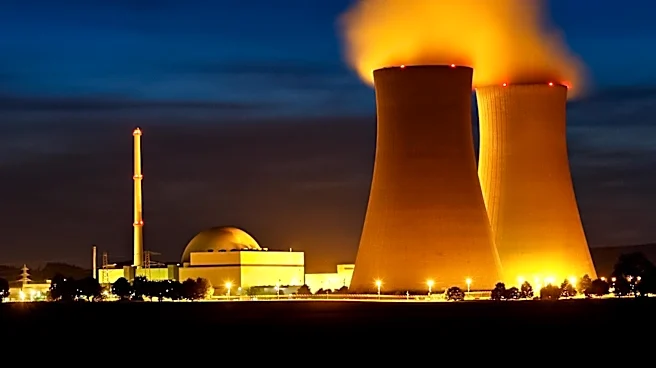
The Trump administration has actively supported the expansion of U.S. nuclear generating capacity, issuing executive orders in 2025 to accelerate licensing processes and deploy advanced reactors. Federal agencies have also collaborated with private enterprises
to reactivate dormant power plants. This push comes as major technology companies, including Amazon, Google, and Microsoft, are investing significantly in U.S.-based nuclear energy through multiyear, multimillion-dollar power deals. These companies aim to meet the increasing energy demands of artificial intelligence (AI) and cloud services, which require a constant and reliable power supply. The renewed interest in nuclear power is partly driven by the need for carbon-free energy alternatives and the desire to offset carbon emissions from other sources. Despite the enthusiasm, some experts express skepticism about nuclear power becoming a dominant energy source in the near future, citing historical safety concerns and the long development timelines for new nuclear technologies.
Why It's Important?
The Trump administration's initiatives and the substantial investments from tech giants signal a potential shift in the U.S. energy landscape. Expanding nuclear capacity could provide a stable, carbon-free power source crucial for supporting the rapidly growing AI and cloud computing sectors, which are significant drivers of the U.S. economy. This move could reduce reliance on fossil fuels, contributing to climate goals and enhancing energy independence. However, the skepticism from some experts highlights the challenges, including the long lead times for construction and the high upfront costs associated with nuclear plants. The debate also touches on public perception, as historical incidents have led to concerns about nuclear safety. The success or failure of these efforts will impact energy policy, technological development, and environmental sustainability in the U.S., potentially creating new jobs in the nuclear sector while also raising questions about the economic viability and safety of large-scale nuclear expansion.
What's Next?
The coming years will likely see continued efforts to streamline the licensing and deployment of advanced nuclear reactors under the framework established by the Trump administration. Private enterprises, supported by federal initiatives, are expected to continue working on bringing shuttered power plants back online and developing new nuclear technologies, including small modular reactors (SMRs). The investments from tech companies like Microsoft, which formalized a deal to reopen a reactor at Three Mile Island, and Alphabet's partnerships for advanced reactors, indicate that initial operations for these projects are estimated between 2027 and 2032. However, the long development and construction timelines for nuclear facilities, estimated at around two decades from scratch, mean that the full impact of these initiatives will not be realized immediately. The ongoing debate between nuclear advocates and opponents, particularly regarding cost-effectiveness and safety, will also shape future policy decisions and public acceptance.
Beyond the Headlines
The renewed focus on nuclear energy in the U.S. extends beyond immediate energy needs, touching upon deeper implications for national security, technological innovation, and environmental ethics. The push for nuclear power, particularly from the Trump administration, reflects a strategic effort to maintain U.S. leadership in energy technology and reduce vulnerability to global energy market fluctuations. The involvement of major tech companies also highlights a growing trend where private sector demands for sustainable and reliable energy are influencing national infrastructure development. This could lead to a re-evaluation of the role of government in fostering critical infrastructure projects and the balance between public and private investment. Furthermore, the discussion around SMRs, despite expert skepticism about their immediate commercial viability, points to a long-term vision for decentralized and flexible energy solutions. The ethical considerations of nuclear waste management and the long-term safety of advanced reactor designs will remain central to public discourse and regulatory oversight, shaping the social contract around nuclear technology for decades to come.