



What's Happening?
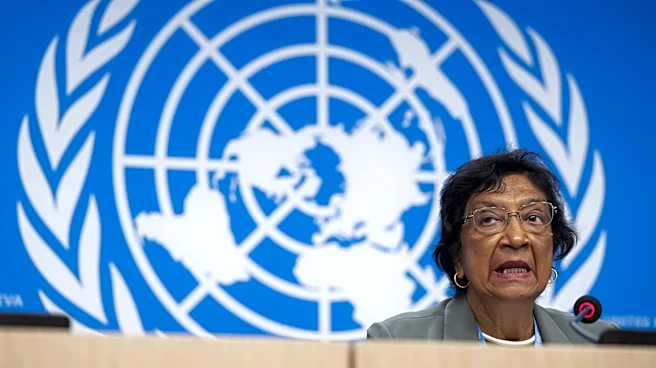
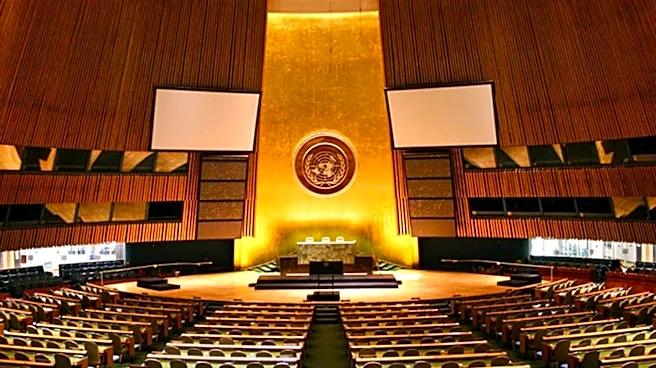
Pakistan has called for a strengthened role for the United Nations General Assembly (UNGA) in maintaining international peace and security, particularly when the Security Council faces impasses due to veto power. During a UNGA plenary session, Pakistan's
First Secretary Ansar Shah proposed a dedicated mechanism to monitor the implementation of Assembly resolutions. This proposal aims to enhance accountability and ensure that resolutions translate into concrete actions, addressing a long-standing issue where many UN resolutions remain unimplemented. Pakistan also advocated for more frequent and substantive reports from the Security Council to the General Assembly, seeking greater transparency between the two principal UN bodies. The initiative is driven by the observation that conflicts, such as those in Gaza and involving the United States and Iran, highlight the difficulty of securing timely international responses when major powers are divided.
Why It's Important?
Pakistan's proposal is significant because it seeks to rebalance power within the United Nations system, potentially empowering the General Assembly to act more decisively when the Security Council is paralyzed by vetoes. This could lead to more effective and timely international responses to global crises, which is crucial for maintaining peace and security. For the U.S., a stronger General Assembly could mean increased pressure to adhere to resolutions, even those that might not align with its immediate interests, as the U.S. is one of the five permanent members with veto power in the Security Council. The proposed monitoring mechanism would introduce a new layer of accountability for member states and the UN Secretariat, potentially improving the credibility and efficacy of UN actions. This initiative could also influence how international disputes, including those with U.S. involvement, are addressed on the global stage, fostering a more multilateral approach to conflict resolution.
What's Next?
The proposal by Pakistan will likely be subject to further discussions and negotiations within the United Nations General Assembly. Member states will need to deliberate on the feasibility and implications of establishing a dedicated monitoring mechanism for resolutions and increasing reporting requirements from the Security Council. The initiative could face resistance from permanent members of the Security Council who may view it as an attempt to dilute their authority. However, it may garner support from other member states that have historically felt marginalized by the Security Council's veto power. The outcome of these discussions could lead to reforms in UN procedures, potentially altering the dynamics of international diplomacy and decision-making. The ongoing conflicts and geopolitical tensions will likely continue to fuel the debate on the effectiveness of current UN structures and the need for reform.
Beyond the Headlines
Beyond the procedural aspects, Pakistan's push for a stronger General Assembly reflects a broader global sentiment for more equitable and democratic participation in international governance. The current structure of the UN, particularly the Security Council's veto power, has long been criticized for concentrating power among a few nations, often at the expense of collective action. This initiative could spark deeper conversations about the future of multilateralism and the need for institutional reforms to address contemporary global challenges more effectively. It also highlights the ongoing tension between national sovereignty and international responsibility, as member states grapple with how to balance their individual interests with the collective good. The success or failure of this proposal could influence the perceived legitimacy and relevance of the United Nations in an increasingly complex and interconnected world, potentially leading to a more inclusive or, conversely, a more fragmented international system.