







What's Happening?
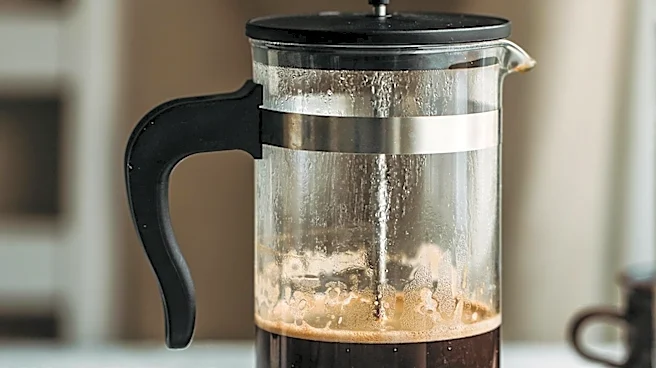
Bodum has voluntarily recalled approximately 5.9 million French press coffee makers nationwide, according to the U.S. Consumer Product Safety Commission (CPSC). The recall, which includes various models with replaceable carafes manufactured between 1974
and October 2026, is due to a risk of serious burn injuries. The glass carafe can unexpectedly break during use, particularly if damaged or cracked, or if a metal spoon is used to stir the coffee. As of the recall announcement, there have been 70 reports of carafes breaking and 48 reports of burn injuries associated with the product. Affected models include Bistro, Brazil, Caffettiera, Chambord, Crema, Java, Jesper, and Kenya, sold at major retailers like Target, Walmart, and online platforms such as Amazon.
Why It's Important?
This recall highlights significant consumer safety concerns within the household goods market, particularly for products used daily. The potential for serious burn injuries from a common kitchen appliance underscores the importance of product design and material integrity. For consumers, it means a potential hazard in their homes and the need to check their existing coffee makers. For retailers, it necessitates removing affected products from shelves and managing customer inquiries. The incident also emphasizes the ongoing role of regulatory bodies like the CPSC in identifying and addressing product defects to protect public health and safety, impacting consumer trust in brands and product categories.
What's Next?
Consumers who own a recalled Bodum French press are advised to confirm if the carafe is visibly cracked or damaged. The safest course of action is to dispose of the coffee maker. While Bodum is not currently issuing refunds, consumers can contact the company to receive a plastic stirring spoon and an additional warning label. This label will remind users not to use damaged carafes and to avoid metal spoons to prevent glass breakage. Going forward, Bodum states that these products will be sold with the plastic stirring spoon and the new warning label to mitigate future risks and ensure safer use.
Beyond the Headlines
The Bodum recall extends beyond immediate safety concerns, touching upon broader implications for product liability and manufacturing standards. The long manufacturing period of the recalled products (1974-2026) suggests a persistent design vulnerability that went unaddressed for decades, raising questions about long-term product safety monitoring. The company's decision to provide a plastic spoon and warning label instead of a full refund or replacement for all units could influence consumer perception of corporate responsibility. This situation may prompt a closer look at the durability and safety testing protocols for widely used kitchen items, potentially leading to stricter industry standards for glass components in high-temperature applications.