


What's Happening?
Three prominent women in Hawaii are leading significant environmental and conservation efforts across the islands. Christy Martin, Program Manager and Information Officer at UH Pacific Cooperative Studies Unit / Coordinating Group on Alien Pest Species
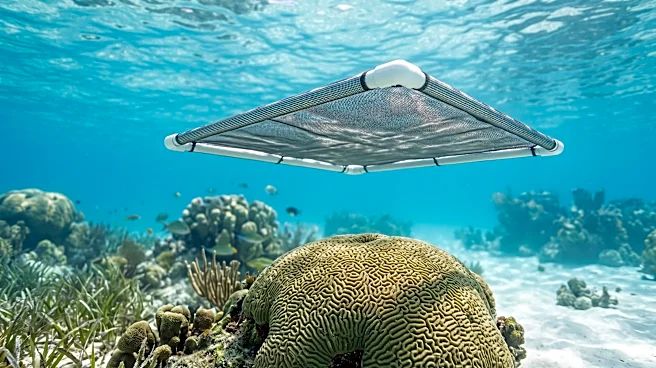
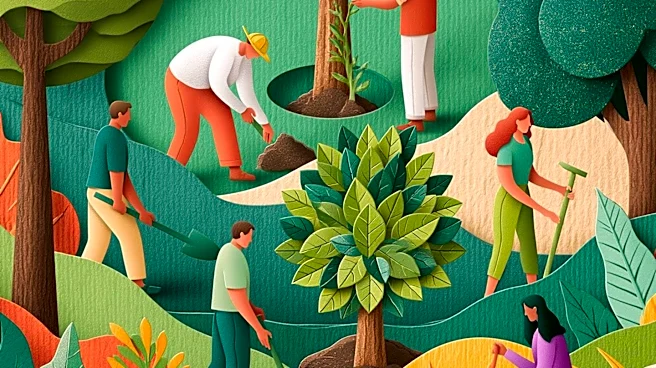
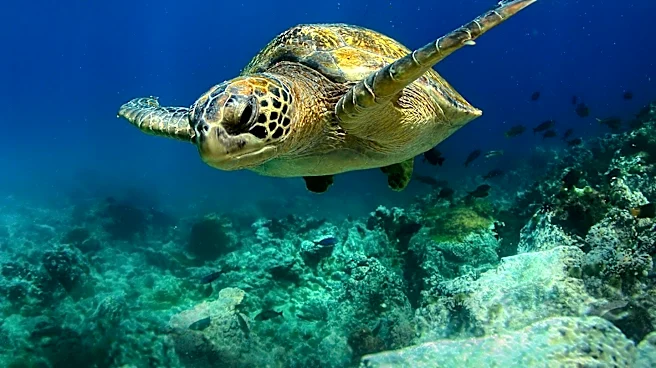
(CGAPS), is focused on mitigating invasive species, which are the leading cause of biodiversity loss in Hawaii. Her work involves policy advocacy, such as restricting the movement of coconut rhinoceros beetle host material, and public awareness campaigns. Amy Goto, a Scientific Diver and Boat Captain at Kuleana Coral Restoration, is dedicated to reef restoration, addressing threats like climate change and ocean acidification. Her team performs emergency coral reattachment and deploys coral larvae to restore damaged reefs. Lea Hong, Associate Vice President and Hawaii State Director of Trust for Public Land, has led efforts to preserve 49 sites totaling nearly 78,000 acres statewide, focusing on creating parks and conserving land for people, often returning culturally significant lands to Native Hawaiian organizations. These leaders exemplify a multi-faceted approach to environmental protection, combining scientific research, policy, and community engagement.
Why It's Important?
The work of these Hawaiian environmental leaders is crucial for preserving the unique and fragile ecosystems of the islands, which are biodiversity hotspots with a high rate of endemism. Invasive species, climate change, and land development pose significant threats to Hawaii's natural resources, impacting not only wildlife but also human health and cultural practices. Christy Martin's efforts in biosecurity and policy are vital for preventing further ecological damage and protecting native species. Amy Goto's coral restoration work directly combats the devastating effects of climate change on reefs, which are essential for marine life, coastal protection, and local livelihoods. Lea Hong's land conservation initiatives ensure that culturally and environmentally significant areas are protected for future generations, often empowering Native Hawaiian communities in stewardship. Their collective work highlights the interconnectedness of environmental health, cultural preservation, and community well-being in Hawaii, offering models for sustainable practices in other vulnerable regions.
What's Next?
Christy Martin and CGAPS will continue their advocacy for stronger biosecurity legislation and public awareness campaigns to combat invasive species. Amy Goto and Kuleana Coral Restoration will proceed with their reef restoration projects, including emergency reattachment and coral larval deployment, while also engaging in community outreach and education. Lea Hong is preparing to retire in December, but her legacy at Trust for Public Land Hawaii will continue through the established Aloha ʻĀina, Sustainable Hawaiʻi, and Parks for People programs, which will carry on land acquisitions and community-led conservation efforts. The ongoing challenges of climate change, invasive species, and development pressures mean that these initiatives will remain critical for Hawaii's environmental future. The continued engagement of community members, policymakers, and scientific experts will be essential to sustain and expand these vital conservation efforts.
Beyond the Headlines
The stories of these women reveal a deeper narrative about the profound connection between the people of Hawaii and their environment, encapsulated by the concept of 'kuleana'—the responsibility to care for the land and sea. Their work transcends mere scientific or policy interventions; it is rooted in a cultural understanding that the health of the environment directly reflects the health of the community. The challenges they face, such as the slow growth rate of Hawaiian corals or the commodification of land, highlight the unique vulnerabilities and complexities of island ecosystems. Their dedication to involving local communities, from traditional fishing techniques in coral restoration to community input in park design, demonstrates a holistic approach to conservation that integrates indigenous knowledge with modern science. This integrated approach is not only effective but also fosters a sense of collective stewardship, ensuring that environmental protection is a shared responsibility and a pathway to cultural resilience.