






What's Happening?
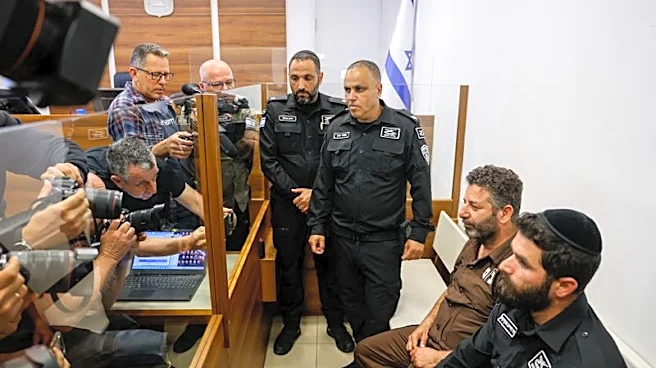
The Ashkelon Magistrate’s Court in Israel has extended the detention of two foreign activists, Saif Abu Keshek from Spain and Thiago Avila from Brazil, who were part of a flotilla attempting to break the Israeli naval blockade of Gaza. The activists were detained
after Israeli forces intercepted the flotilla near Crete. The court's decision allows authorities to continue questioning them until Sunday. The activists are accused of aiding the enemy during wartime and having contact with terrorist elements, specifically linking them to the Popular Conference for Palestinians Abroad (PCPA), which is alleged to be a Hamas front. Both men are on a hunger strike, and their legal representatives argue that the case criminalizes humanitarian aid and questions Israel's authority to arrest foreign nationals intercepted far from its shores.
Why It's Important?
This case highlights the ongoing international tension surrounding Israel's blockade of Gaza and the legal and ethical implications of intercepting humanitarian missions in international waters. The accusations against the activists and the involvement of the PCPA, a group sanctioned by the U.S. Treasury, underscore the complex geopolitical dynamics at play. The situation could impact Israel's diplomatic relations, particularly with Spain, which has demanded the release of Abu Keshek. The case also raises broader questions about the legality of Israel's actions in international waters and the treatment of foreign nationals under its jurisdiction.
What's Next?
The defense plans to appeal the court's decision, arguing that no formal charges have been filed and that the detention is solely for interrogation purposes. The outcome of this appeal could influence future international responses to similar flotilla efforts and Israel's legal standing in such cases. Additionally, the ongoing hunger strike by the activists may draw further international attention and pressure on Israeli authorities to address humanitarian concerns.