





What's Happening?
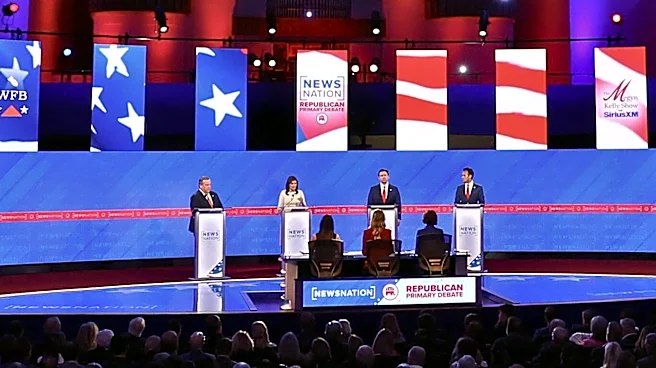
The Steamboat Institute Campus Liberty Tour hosted a debate at the Virginia Military Institute (VMI) on the resolution: 'America benefits from the end of the rules-based international order.' Retired U.S. Army Col. Douglas Macgregor, Ph.D., argued the affirmative,
suggesting that the post-Cold War system has weakened U.S. national security and that America should prioritize its own interests and reduce its involvement in organizing the rest of the world. Hal Brands, Ph.D., a professor at Johns Hopkins, argued the negative, defining the rules-based order as the system of international laws, institutions, and norms established after World War II, which he believes has largely benefited the U.S. and the world. Brands conceded that the order needs updates, citing China's exploitation of its World Trade Organization entry and the corruption of institutions like the U.N. by autocratic powers. Macgregor advocated for a return to a focus on domestic issues and a more limited military engagement, while Brands warned that the collapse of the rules-based order would lead to a 'much darker world' with increased aggression and less global prosperity.
Why It's Important?
This debate is important for understanding the evolving discourse within the U.S. regarding its role in global affairs and the future of international cooperation. The arguments presented reflect a growing tension between those advocating for a more isolationist, 'America First' approach and those who believe in the continued necessity of U.S. leadership within a structured international system. For U.S. politics, this debate highlights a fundamental divide that could influence foreign policy decisions, defense spending, and engagement with international organizations. Economically, a shift away from the rules-based order, as Brands suggests, could lead to increased friction and reduced prosperity in the global economy, impacting U.S. businesses reliant on stable international trade and predictable market conditions. Conversely, Macgregor's argument for prioritizing domestic economic prosperity could resonate with segments of the U.S. population seeking to reallocate resources from foreign interventions to internal development. The discussion about China's actions within the World Trade Organization also underscores ongoing challenges to the existing trade framework and the need for the U.S. and its allies to find new ways to address these issues.
What's Next?
The debate at VMI is part of a broader national conversation that will continue to shape U.S. foreign policy. The arguments presented by both Macgregor and Brands are likely to be echoed in political campaigns, policy discussions, and academic circles. Future U.S. administrations will face the challenge of balancing national interests with international responsibilities, potentially leading to shifts in alliances, trade agreements, and military deployments. The call for better burden-sharing within alliances, as mentioned by Brands, suggests that the U.S. may continue to pressure allies to increase their defense spending. The need to push back against countries like China that exploit international institutions will likely lead to continued efforts to reform global trade rules and strengthen international enforcement mechanisms. The outcome of this ongoing debate will have significant implications for the U.S.'s standing in the world, its economic prosperity, and its ability to address global challenges.
Beyond the Headlines
The debate touches upon profound philosophical questions about the nature of international order and the responsibilities of a global superpower. Brands' argument that the rules-based order has been 'more good than bad' for humanity since 1945 highlights the historical achievements of a system largely shaped by the U.S., including unprecedented international trade, prosperity, and the spread of democracy. Macgregor's counter-argument, questioning the cost in 'American blood and treasure' and advocating for a focus on direct security needs, reflects a growing sentiment that the U.S. has overextended itself. This tension between global leadership and national self-interest is a recurring theme in U.S. history. The discussion also implicitly raises ethical considerations about the U.S.'s moral obligations to uphold human rights and international norms versus its pragmatic pursuit of national interests. The debate's impact extends beyond immediate policy, influencing the long-term identity and purpose of the United States on the global stage.