





What's Happening?
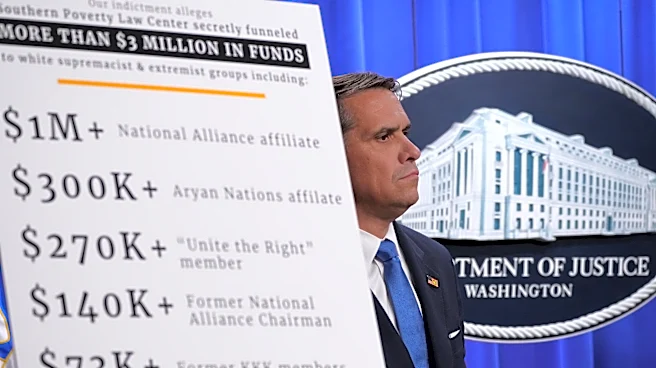
The Southern Poverty Law Center (SPLC) is contesting a recent indictment by the Department of Justice (DOJ), which accuses the organization of misleading donors about payments made to informants. The DOJ claims that the SPLC paid over $3 million to informants,
many of whom were leaders within hate groups like the Ku Klux Klan, and alleges that the SPLC's actions inadvertently supported these groups. In response, the SPLC asserts that its informant program has been instrumental in aiding law enforcement to incarcerate violent extremists. The organization has filed court papers stating that information from its informants led to significant convictions, including that of a member of the Atomwaffen Division who planned a terrorist attack in Las Vegas. The SPLC is seeking a judicial order to compel the DOJ to correct what it claims are false statements made by Acting Attorney General Todd Blanche, who suggested that the SPLC did not share informant information with the FBI.
Why It's Important?
This legal battle between the SPLC and the DOJ highlights the complexities and potential pitfalls of using informants in law enforcement operations. The outcome of this case could have significant implications for how non-profit organizations collaborate with government agencies in combating extremism. If the SPLC's claims are validated, it could reinforce the credibility and necessity of informant programs in dismantling hate groups. Conversely, if the DOJ's allegations hold, it may lead to increased scrutiny and regulation of such programs, potentially affecting their funding and operational strategies. The case also underscores the delicate balance between transparency to donors and operational secrecy required in sensitive law enforcement collaborations.
What's Next?
The SPLC is currently awaiting a judicial decision on its request for the DOJ to amend its statements. The case could prompt further investigations into the SPLC's operations and its relationship with law enforcement agencies. Depending on the court's ruling, there may be broader discussions and potential policy changes regarding the use of informants by non-profit organizations. Stakeholders, including civil rights groups and law enforcement agencies, will likely monitor the proceedings closely, as the outcome could influence future collaborations and the legal framework governing such partnerships.