







What's Happening?
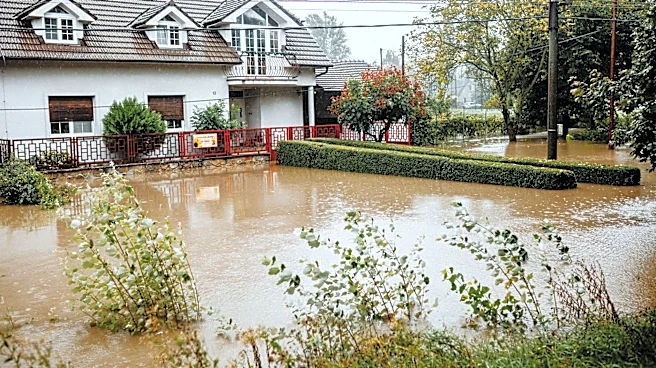
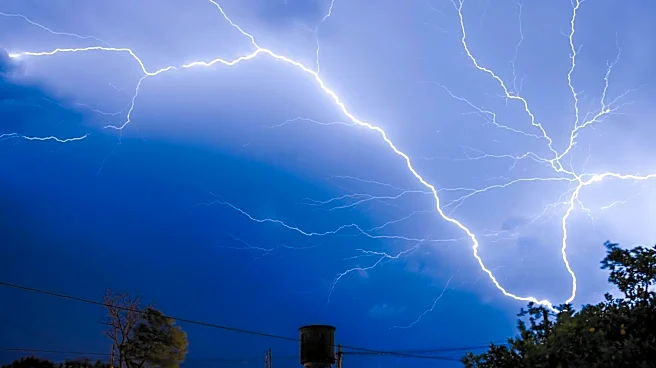
Indiana's corn and soybean crops have experienced significant variability due to localized weather conditions, according to Dan Quinn, Purdue University Extension corn specialist. The state saw a strong start to the planting season, but excessive rainfall
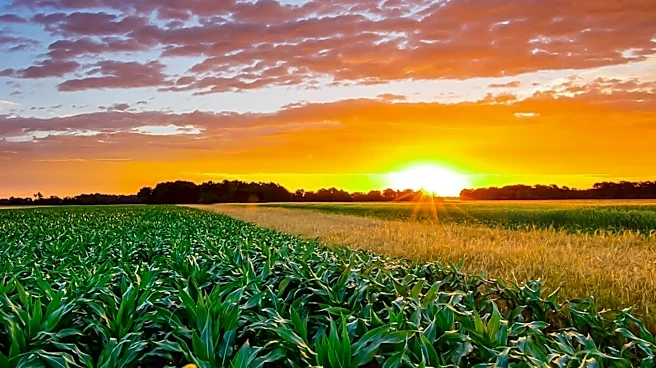
in June led to flooding and uneven crop development. Despite these challenges, July's favorable weather conditions have helped the crops recover. Disease pressure, particularly from gray leaf spot, has been a concern, but tar spot and other diseases remain low. The variability in weather has resulted in differing yield potentials across the state, with some areas expected to reach around 200 bushels per acre.
Why It's Important?
The variability in Indiana's crop yields highlights the impact of localized weather patterns on agriculture. This situation underscores the importance of adaptive management strategies for farmers, who must navigate unpredictable weather to optimize yields. The potential for strong yields in some areas suggests resilience in the state's agricultural sector, but the challenges faced by others highlight the need for continued monitoring and timely interventions, such as fungicide applications, to protect crops from disease.
What's Next?
Farmers in Indiana will continue to monitor their fields for disease pressure and make necessary fungicide applications to protect their crops. The outcome of the growing season will depend on weather conditions in the coming months, particularly during the critical pod-filling stage for soybeans. The state's agricultural stakeholders will likely focus on strategies to mitigate the impact of future weather variability on crop yields.