



What's Happening?
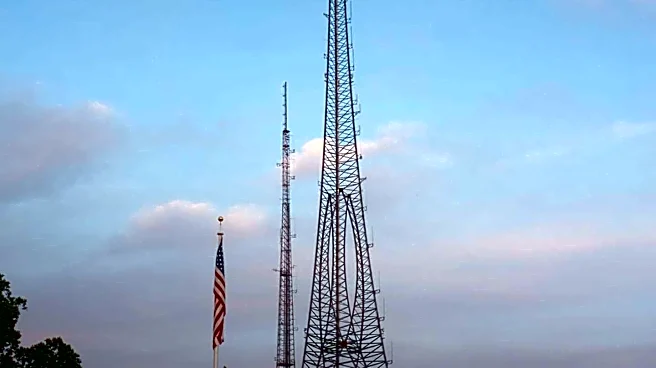
The Former Naval Radio Station in American Samoa, originally completed in 1917, served as a critical communication facility for the United States in the South Pacific. It was unique as the only U.S. Naval station established south of the equator. This
station played a vital role in maintaining communications with various locations across the South Pacific, including New Zealand, Australia, and British, German, and French territories in the region. The facility underwent renovations in 1970, during which its original radio tower was removed. Today, the building has been repurposed and currently functions as the Territorial Registrar’s Office for American Samoa.
Why It's Important?
The historical significance of the Former Naval Radio Station lies in its strategic importance for U.S. communication and influence in the South Pacific during the early 20th century. Its unique location south of the equator underscored its role in extending American reach and maintaining connectivity in a vast and geopolitically significant area. The station facilitated diplomatic, military, and commercial communications, contributing to regional stability and U.S. interests. Its transformation into the Territorial Registrar’s Office reflects a shift in its utility from a military communication hub to a civilian administrative center, highlighting the evolving needs and infrastructure repurposing within U.S. territories. This change also signifies the enduring legacy of historical U.S. infrastructure in supporting contemporary governmental functions.
What's Next?
While the building now serves as the Territorial Registrar's Office, its historical context as a former naval radio station could lead to future initiatives focused on preserving its heritage. Potential next steps might include historical markers or educational exhibits detailing its past role in U.S. and South Pacific communications. Local government and historical societies could collaborate to document and share the station's story, ensuring that its significance is not lost. Additionally, the ongoing use of the building for administrative purposes suggests continued maintenance and adaptation to meet the needs of the Territorial Registrar's Office, potentially involving further renovations or technological upgrades to support modern governmental operations.
Beyond the Headlines
The repurposing of the Former Naval Radio Station in American Samoa offers a broader perspective on the evolution of strategic infrastructure and its adaptation over time. Beyond its immediate function as a communication hub, the station represented a tangible manifestation of U.S. geopolitical strategy in the Pacific. Its current use as a government office highlights the practical and sustainable reuse of historical buildings, integrating them into the contemporary fabric of the community. This transformation also subtly reflects the changing nature of global communication, from large-scale radio installations to modern digital networks. The site serves as a quiet reminder of past technological prowess and strategic imperatives, now contributing to the daily civic life of American Samoa.