
What's Happening?
Greenland's strategic location above the Arctic Circle has made it a focal point in global security discussions, particularly for the United States under President Trump. The U.S. has expressed interest
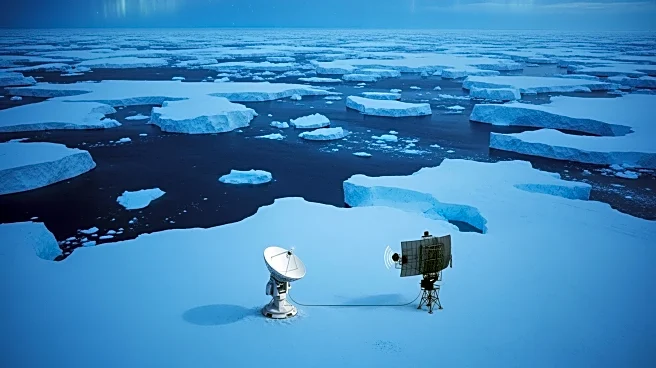
in acquiring Greenland, a self-governing territory of Denmark, due to its significant mineral resources and strategic position guarding the Arctic and North Atlantic approaches to North America. This interest is part of a broader geopolitical context where climate change is opening new trade routes and increasing competition for resources in the Arctic. The U.S. already operates the Pituffik Space Base in Greenland, which supports missile warning and space surveillance operations. However, both Denmark and Greenland have opposed U.S. acquisition efforts, emphasizing Greenland's right to self-determination. The region's importance is further underscored by increased military activities from Russia and China, with Russia enhancing its Arctic military presence and China declaring itself a 'near-Arctic state.'
Why It's Important?
The U.S. interest in Greenland highlights the growing strategic importance of the Arctic region as climate change opens new shipping lanes and access to untapped mineral resources. Control over Greenland could enhance U.S. military and economic influence in the Arctic, countering Russian and Chinese ambitions. The island's mineral wealth, particularly rare earth elements, is crucial for high-tech industries, making it a valuable asset in reducing Western dependence on Chinese supplies. The geopolitical dynamics in the Arctic could significantly impact global trade routes and military strategies, with potential implications for international relations and security policies. The situation also raises questions about sovereignty and the rights of indigenous populations in Greenland, as well as environmental concerns related to resource extraction.
What's Next?
Denmark and Greenland are likely to continue resisting U.S. acquisition attempts, emphasizing their sovereignty and self-determination. The U.S. may seek to strengthen its military and economic presence in the region through diplomatic and strategic partnerships. Meanwhile, Russia and China are expected to continue expanding their influence in the Arctic, potentially leading to increased military and economic competition. The international community may need to address these tensions through multilateral agreements to ensure stability and cooperation in the Arctic. Environmental and indigenous rights issues will also remain critical as stakeholders navigate the complex geopolitical landscape.
Beyond the Headlines
The U.S. interest in Greenland underscores broader themes of national sovereignty and the rights of indigenous peoples in the face of geopolitical ambitions. The situation highlights the ethical considerations of resource extraction in environmentally sensitive areas and the potential impact on local communities. The Arctic's changing landscape due to climate change presents both opportunities and challenges, necessitating a balance between economic development and environmental preservation. The evolving geopolitical dynamics in the Arctic could also influence global power structures and alliances, with long-term implications for international security and economic policies.