
What's Happening?
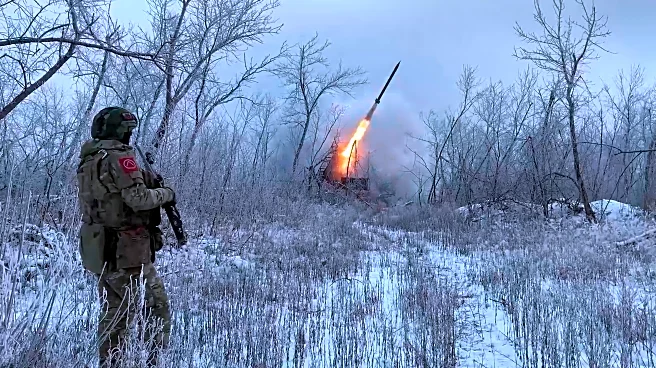
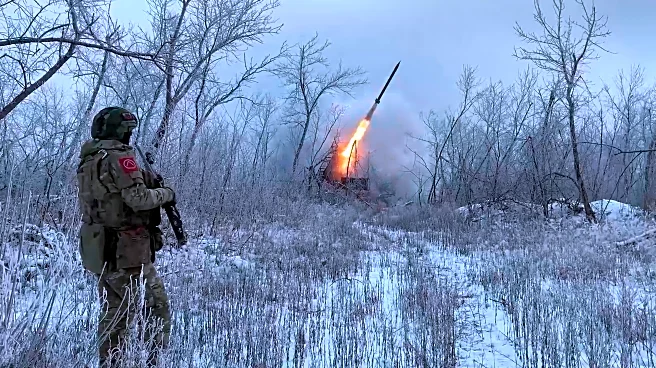
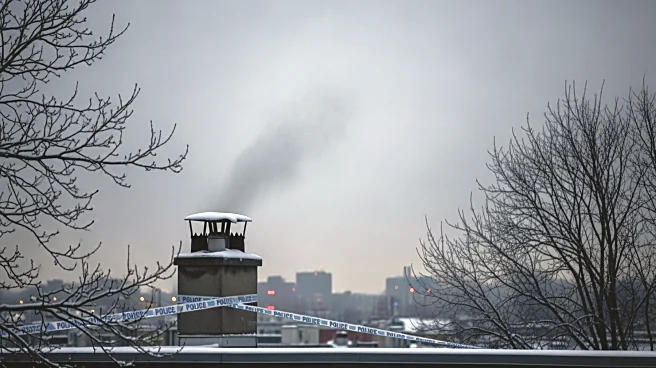
Kyiv's Mayor Vitaly Klitschko has advised residents to temporarily evacuate the city following Russian strikes that have left significant parts of the Ukrainian capital without power or heating. The attacks targeted Kyiv's heating and energy infrastructure,
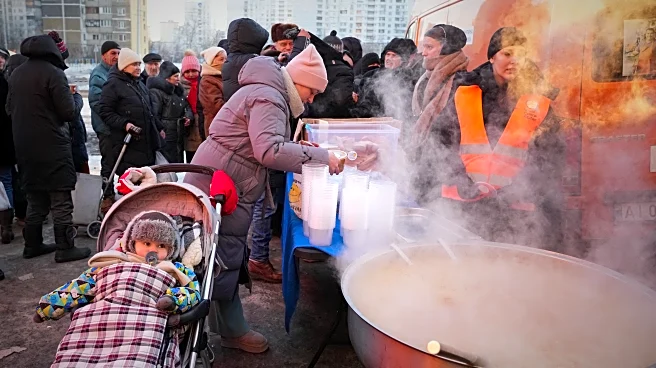
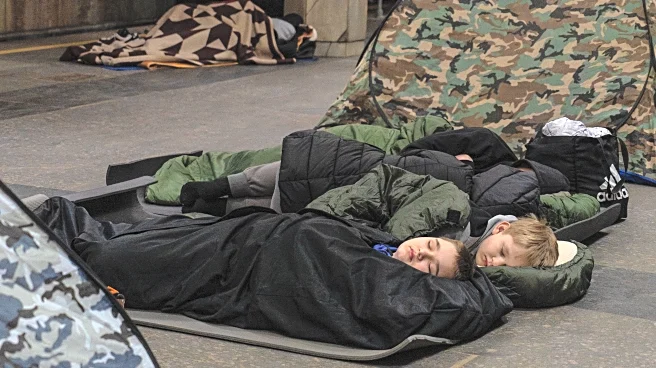
affecting approximately 6,000 buildings as temperatures are expected to drop to nearly -20°C. The strikes have also resulted in casualties and damage to diplomatic facilities, including the Qatari embassy. Ukrainian President Volodymyr Zelensky highlighted the proximity of the strikes to the European Union border, suggesting potential implications for neighboring countries. The situation has led to emergency measures, including draining water from buildings to prevent pipe bursts due to the lack of centralized heating.
Why It's Important?
The Russian strikes on Kyiv represent a significant escalation in the ongoing conflict, directly impacting civilian infrastructure and living conditions. The loss of heating during extreme winter temperatures poses a severe humanitarian crisis, potentially leading to increased displacement and suffering among the civilian population. The strikes also underscore the broader geopolitical tensions, as the proximity to the EU border raises concerns about regional security and stability. The situation could prompt international responses, including increased support for Ukraine from Western allies and potential diplomatic repercussions for Russia. The attacks highlight the vulnerability of critical infrastructure in conflict zones and the need for robust protective measures.
What's Next?
The immediate focus will be on restoring essential services in Kyiv and ensuring the safety and well-being of its residents. International aid and support may be mobilized to address the humanitarian needs arising from the crisis. The Ukrainian government is likely to seek further assistance from its allies to bolster its defense capabilities and infrastructure resilience. Diplomatic efforts may intensify to de-escalate the conflict and address the security concerns of neighboring EU countries. The situation could also influence ongoing discussions about sanctions and other measures against Russia, as well as the broader strategic dynamics in Eastern Europe.