







What's Happening?
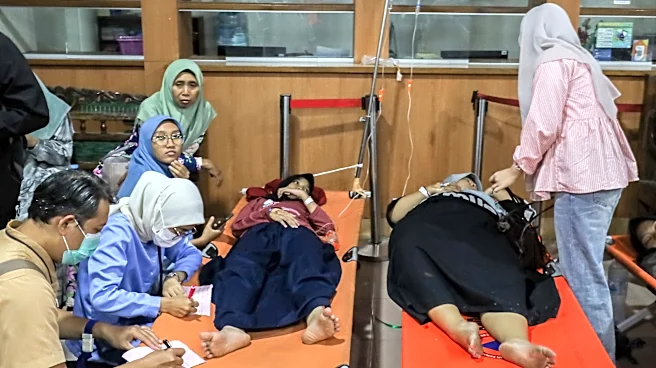
Indonesia has significantly advanced Southeast Asia's readiness for future epidemic or pandemic threats by conducting a landmark pandemic simulation exercise. This initiative aims to strengthen the region's capacity to rapidly develop safe and effective
vaccines and other tools against a potential 'Disease X.' Over 120 experts from various fields, including virus surveillance, laboratory testing, clinical trials, Artificial Intelligence, biosecurity, manufacturing, regulatory, and policy, participated in a table-top event in Jakarta. The event was co-hosted by the Indonesian Ministry of Health and the Coalition for Epidemic Preparedness Innovations (CEPI), a global organization dedicated to transforming the world's response to epidemic and pandemic threats. Representatives from health ministries and regulatory bodies across Malaysia, Singapore, and Australia also attended as observers.
Why It's Important?
This simulation exercise is crucial for enhancing global health security, particularly in a region as densely populated and interconnected as Southeast Asia. The proactive approach to preparing for a 'Disease X' signifies a critical lesson learned from past pandemics, emphasizing the need for rapid response and vaccine development. For the U.S., this initiative contributes to a more stable global health environment, reducing the likelihood of new pandemics emerging from or spreading rapidly through the region, which could eventually impact U.S. borders and economy. Improved preparedness in other nations also lessens the burden on U.S. resources during a global health crisis. The collaboration with CEPI highlights the importance of international partnerships in addressing shared health threats, benefiting global scientific research and technological advancements.
What's Next?
Following the simulation exercise, Indonesia and CEPI will likely analyze the findings to identify strengths and weaknesses in regional outbreak preparedness. This analysis will inform future strategies for advancing scientific research, technology, and cooperation to mitigate epidemic and pandemic risks. The lessons learned from this exercise are expected to be shared with other nations, potentially leading to similar preparedness initiatives globally. Continued investment in research and development for new vaccines and tools against emerging infectious diseases will remain a priority. The involvement of various ministries and international observers suggests a coordinated effort to integrate these learnings into national and regional health policies, aiming for a more robust and unified response to future health crises.
Beyond the Headlines
Beyond the immediate goal of pandemic preparedness, this exercise underscores the evolving landscape of global health security, where collaboration and foresight are paramount. The inclusion of Artificial Intelligence and biosecurity experts highlights the increasing role of advanced technologies in disease surveillance and response. This initiative also reflects a broader shift towards proactive health diplomacy, where nations like Indonesia are taking leadership roles in addressing global challenges. The long-term implications include the potential for a more integrated global health infrastructure, capable of responding to threats with unprecedented speed and efficiency. This could lead to a redefinition of international health partnerships, emphasizing shared responsibility and collective action in safeguarding global public health.