







What's Happening?
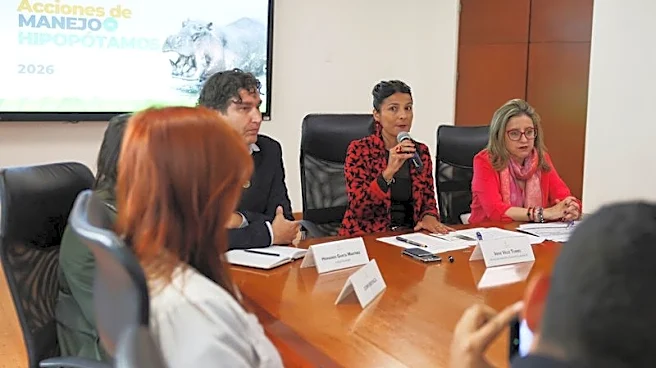
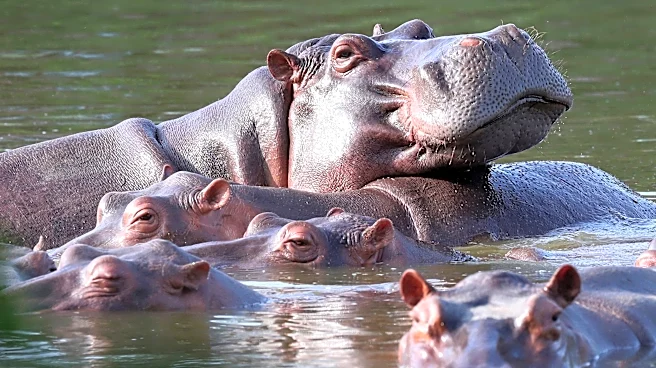
Colombian officials have authorized a plan to cull up to 80 hippos that are descendants of animals brought to the country by drug lord Pablo Escobar in the 1980s. These hippos have become a threat to native species and local villagers, as they have displaced
native wildlife and posed dangers to humans. The decision to cull the hippos comes after other methods, such as neutering and relocation, proved too costly and ineffective. The hippos, which have become a tourist attraction, are the only wild population outside Africa, originating from Escobar's private zoo.
Why It's Important?
The culling of the hippos raises significant environmental and ethical questions. On one hand, the hippos pose a real threat to Colombia's ecosystems and local communities, necessitating action to control their population. On the other hand, the decision to cull them has sparked controversy among animal rights activists who argue for non-lethal methods. This situation highlights the complex balance between conservation efforts and animal welfare, as well as the long-term impacts of human actions on ecosystems. The decision could set a precedent for how similar situations are handled globally.
What's Next?
The Colombian government has not specified when the culling will begin, but it is expected to proceed as part of efforts to preserve local ecosystems. Animal rights groups are likely to continue opposing the cull, advocating for alternative solutions. The situation may prompt further discussions on wildlife management and conservation strategies, particularly in regions where invasive species pose significant challenges. The outcome of this culling operation could influence future policies and actions regarding invasive species management in Colombia and beyond.