





What's Happening?
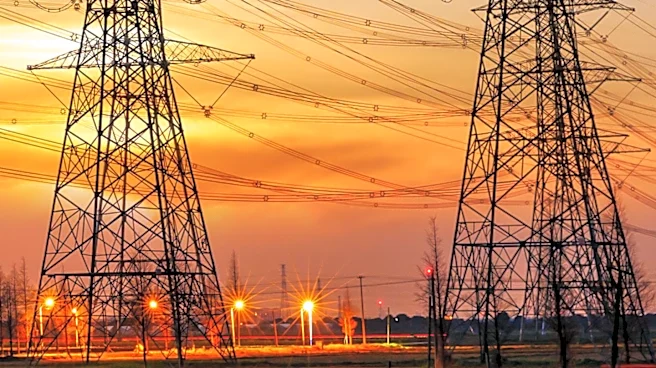
The Asian Development Bank (ADB) is actively pursuing its $50 billion Pan-Asia Power Grid Initiative. This initiative aims to integrate regional power systems across Asia to facilitate the cross-border movement of clean energy. The ADB is addressing bottlenecks
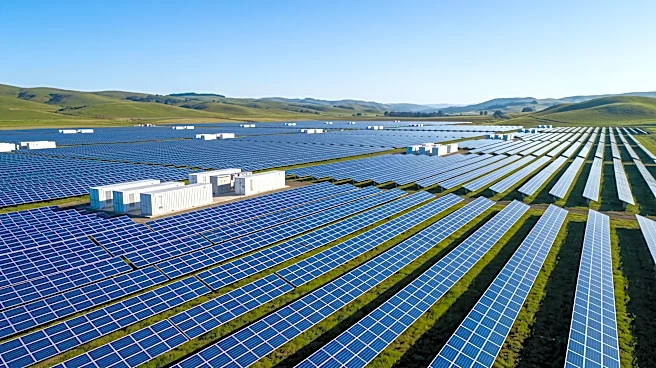
in delivering renewable energy, recognizing that while the cost of generating power from solar and wind has significantly decreased, other factors hinder its sustainable delivery. These factors include the high demand for critical minerals like copper, lithium, and rare earths for building renewable energy infrastructure, which leads to intense resource competition and geopolitical tension. Additionally, the initiative acknowledges that sustainable power generation resources are often geographically distant from urban centers where demand is highest, making robust power grids crucial for overcoming this challenge. The ADB's approach involves both financing large-scale grid infrastructure and promoting policy coordination among participating countries to enable cross-border power projects.
Why It's Important?
This initiative is important because it directly addresses the growing demand for power across Asia and the Pacific, driven by rising living standards and the energy needs of advanced computing and artificial intelligence. By integrating regional power systems, the ADB aims to enhance energy security and accelerate decarbonization efforts in a region heavily reliant on fossil fuels. The focus on clean energy transition, despite its reliance on critical minerals, signifies a commitment to sustainable development and reducing carbon emissions. The initiative's emphasis on cross-border cooperation and infrastructure development can lead to a more resilient and interconnected energy landscape, potentially mitigating the impact of localized energy shortages and price volatility. Furthermore, by enabling the efficient distribution of renewable energy, it supports the broader global shift towards a low-carbon economy and helps nations achieve their climate goals.
What's Next?
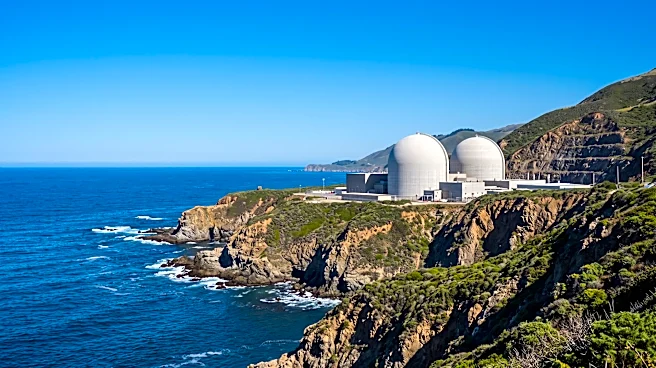
The ADB will continue to finance large-scale grid infrastructure projects and work on policy coordination among countries to further integrate regional power systems. The initiative is expected to enable more cross-border power projects that were previously considered unfeasible. The ADB is also supporting critical-minerals-to-manufacturing value chains through an integrated approach covering exploration, processing, manufacturing, recycling, and circularity to address resource scarcity. Furthermore, the ADB is exploring advanced energy solutions like sodium-ion batteries, which utilize more abundant materials than lithium, and is looking into nuclear fusion energy as a potential long-term solution for sustainable baseload power, with commercial use targeted for the 2030s. These efforts indicate a multi-faceted approach to ensuring future energy security and sustainability in the region.
Beyond the Headlines
The Pan-Asia Power Grid Initiative highlights a broader global trend towards regional energy integration and the increasing recognition of the interconnectedness of energy security, economic development, and climate action. The challenges identified, such as critical mineral dependency and the geographical mismatch between energy generation and demand, are not unique to Asia and represent significant hurdles for the global energy transition. The ADB's strategy of combining infrastructure investment with policy coordination offers a model for other regions facing similar issues. Moreover, the initiative's forward-looking approach, including the exploration of advanced technologies like sodium-ion batteries and nuclear fusion, underscores the long-term vision required to achieve a truly sustainable and secure energy future. This also brings to light the ethical considerations surrounding resource competition and the need for equitable access to clean energy technologies.