






What's Happening?
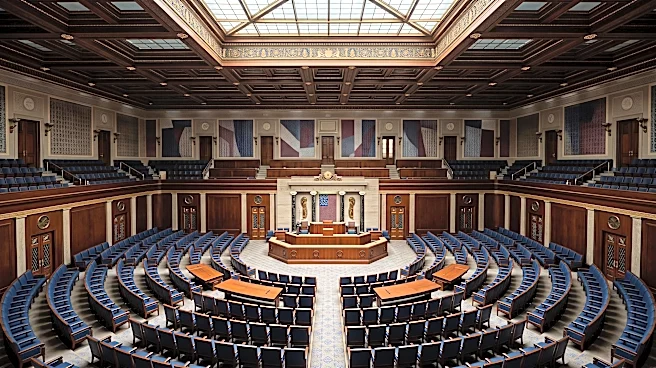
Representatives Mike Levin and Ryan Mackenzie have introduced a federal bill in the House of Representatives aimed at expanding free school meal access for children of military families. This legislative effort mirrors a similar bill introduced in the Senate
by Senators Kim and Heinrich. The proposed legislation, known as the Military Dependents School Meal Eligibility Act, seeks to remove the basic allowance for housing (BAH) from income calculations when determining a family's eligibility for free and reduced-price school meals. Additionally, the bill mandates that the U.S. Department of Agriculture and the Department of Defense submit a report to Congress. This report would outline the feasibility and cost associated with establishing a program to directly certify military children for free and reduced-price school meal programs, streamlining the process for eligible families.
Why It's Important?
This federal bill is important because it addresses a critical issue affecting military families: food insecurity and access to nutritious meals for their children. By excluding the basic allowance for housing (BAH) from income eligibility calculations, the bill aims to rectify a situation where military families, despite their service, are often unfairly penalized and deemed ineligible for school meal programs. This change could significantly increase the number of military children who qualify for free or reduced-price meals, ensuring they receive essential nutrition for their development and academic performance. Furthermore, the requirement for a joint report from the USDA and DOD on direct certification programs highlights a commitment to long-term systemic improvements, potentially simplifying the application process and reducing administrative burdens for military families, thereby enhancing their overall well-being and support.
What's Next?
The bill introduced by Representatives Mike Levin and Ryan Mackenzie will now proceed through the legislative process in the House of Representatives, potentially undergoing committee review and debate. Its alignment with a similar bill in the Senate suggests a bipartisan and bicameral effort, which could increase its chances of passage. If enacted, the immediate next step would be the implementation of the revised income eligibility criteria for military families, allowing more children to access free and reduced-price school meals. Concurrently, the U.S. Department of Agriculture and the Department of Defense would be tasked with preparing the mandated report to Congress, which will inform future policy decisions regarding direct certification programs for military dependents. The findings of this report could lead to further legislative actions aimed at streamlining and improving food assistance for military families.
Beyond the Headlines
This legislative initiative by Representatives Levin and Mackenzie sheds light on the often-overlooked challenges faced by military families, particularly regarding economic stability and access to essential services. The exclusion of BAH from income calculations for school meal eligibility points to a broader systemic issue where military compensation structures can inadvertently disqualify families from social safety net programs. This bill represents a step towards a more holistic understanding of military family welfare, acknowledging that service members' unique financial situations require tailored policy solutions. Beyond the immediate impact on school meals, this effort could spark further discussions and reforms aimed at ensuring that military families receive comprehensive support, reflecting the nation's commitment to those who serve. It also highlights the role of legislative action in correcting unintended consequences of existing policies and adapting them to better serve specific vulnerable populations.