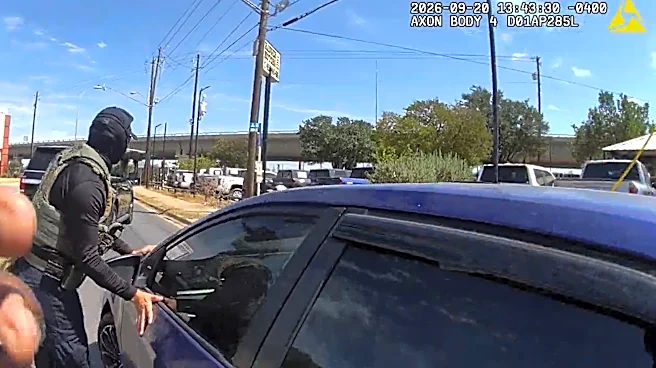










What's Happening?
The term "modus operandi" (M.O.) refers to the characteristic method of operation employed by an individual or group. In the context of criminal activity, it describes the specific techniques or patterns a perpetrator uses to commit crimes. For instance,
John Wayne Gacy's M.O. involved drugging his victims before strangling them. Beyond criminal applications, the term can also describe systematic approaches in organizational behavior, such as the strategic methods employees use for personal development. In immigration enforcement, it has been used to characterize the methods employed by an administration. The concept highlights the repeatable and identifiable actions that define how certain activities are carried out, whether in illicit acts or structured organizational processes.
Why It's Important?
Understanding the "modus operandi" is crucial across various fields, from law enforcement to organizational management. In law enforcement, identifying a criminal's M.O. can help link crimes, predict future actions, and ultimately apprehend offenders. This systematic approach to crime analysis provides investigators with valuable patterns that might otherwise go unnoticed. In a broader societal context, recognizing the M.O. of different groups or administrations can shed light on their operational strategies and potential impacts. For example, understanding the M.O. of an administration's immigration policies can inform public discourse and advocacy efforts regarding human rights and legal procedures. The term underscores the importance of analyzing consistent patterns of behavior to understand underlying motivations and predict outcomes, affecting public safety, policy development, and organizational efficiency.
What's Next?
The application of "modus operandi" will continue to evolve with advancements in data analysis and behavioral science. In criminal investigations, enhanced forensic techniques and data analytics will likely refine the identification and categorization of M.O.s, leading to more efficient crime solving. For organizations, a deeper understanding of operational styles can inform training programs, policy adjustments, and strategic planning to optimize performance and address systemic issues. In public policy, particularly in areas like immigration, the detailed analysis of administrative M.O.s could lead to increased scrutiny, calls for accountability, and potential reforms aimed at improving ethical standards and operational transparency. The ongoing study of these operational patterns will contribute to more informed decision-making and proactive measures across diverse sectors.
Beyond the Headlines
The concept of "modus operandi" extends beyond its immediate practical applications, touching upon deeper psychological and sociological dimensions. It highlights the human tendency to develop and adhere to patterns, whether consciously or subconsciously. In criminal psychology, an M.O. can reveal aspects of a perpetrator's personality, motivations, and evolving psychological state. Sociologically, the M.O. of institutions or groups can reflect underlying cultural norms, power structures, and systemic biases. For instance, the characterization of an administration's immigration enforcement as "chaotic and cruel" suggests a deeper critique of the values and ethical frameworks guiding those operations. This term, therefore, serves as a lens through which to examine not just what is done, but how and why, offering insights into the complex interplay of individual agency and systemic forces.