







What's Happening?
Congressman Andy Biggs (AZ-05) has led a letter to Secretary of War Pete Hegseth, expressing support for Arizona State University’s (ASU) application to establish the Applied Research for Manufacturing Operational Readiness (ARMOR) Center. The proposed
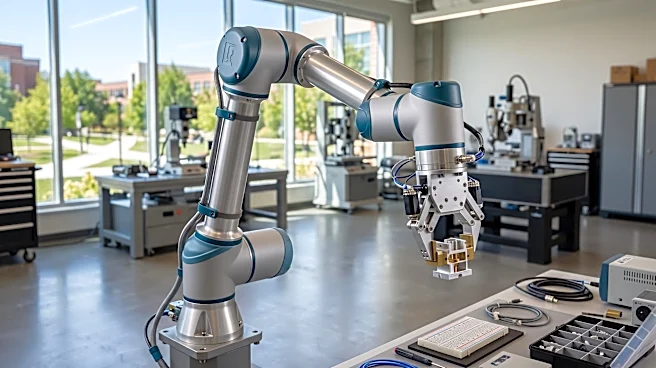
center would be located at ASU’s Polytechnic campus in Arizona’s Fifth Congressional District. The U.S. Army is seeking to create a new national ARMOR Center to accelerate the transition of advanced manufacturing research into capabilities that enhance military readiness and strengthen the American defense industrial base. The center aims to serve as a trusted government partner, coordinating research and facilitating the movement of promising technologies into the Army’s Organic Industrial Base, defense contractors, and other manufacturing partners. Congressman Eli Crane co-led the letter alongside Biggs.
Why It's Important?
The establishment of the ARMOR Center at ASU would significantly bolster Arizona's manufacturing sector and defense industrial base. This initiative is crucial for advancing technologies vital to America’s military readiness, positioning Arizona as a national leader in advanced manufacturing and defense technology. For the U.S. Army, the center would provide a streamlined pipeline to move cutting-edge research from development through maturation, qualification, scaling, and ultimately deployment into military manufacturing and sustainment operations. This effort is expected to strengthen the domestic defense industrial base, reducing reliance on foreign supply chains and enhancing national security. The project could also create numerous high-tech jobs and foster economic growth within Arizona, benefiting local communities and the state's economy.
What's Next?
The U.S. Army is currently evaluating applications for the new national ARMOR Center. Congressman Biggs and Crane's letter to Secretary of War Pete Hegseth is intended to advocate for ASU's proposal. The next step involves the administration's decision on which institution will be selected to host the ARMOR Center. If ASU's bid is successful, the university will proceed with establishing the center, which would then begin its work in advancing manufacturing research for military applications. This would involve coordinating with various stakeholders, including defense contractors and the Army's Organic Industrial Base, to integrate new technologies into defense operations. The selection process will determine the future location and leadership of this critical defense initiative.
Beyond the Headlines
Beyond its immediate impact on military readiness and Arizona's economy, the ARMOR Center could foster a deeper integration between academic research and national defense needs. This collaboration could lead to ethical considerations regarding the application of advanced technologies in warfare and the balance between innovation and responsible development. Culturally, it could reinforce Arizona's identity as a hub for defense technology and advanced manufacturing, potentially attracting further investment and talent to the region. The long-term implications include the potential for the center to become a model for public-private partnerships in defense innovation, influencing how the U.S. develops and deploys military technology for decades to come. It also highlights the ongoing strategic importance of domestic manufacturing capabilities for national security.