

What's Happening?
The ultimate fate of the universe is increasingly understood to depend on the behavior of dark energy, the mysterious force driving its accelerating expansion. While the standard ΛCDM cosmological model, which assumes dark energy is a constant (cosmological
constant Λ), predicts a 'Big Freeze' or heat death, other scenarios are gaining attention. The Big Freeze involves the universe expanding indefinitely, leading to a state where star formation ceases, black holes evaporate, and the cosmos becomes progressively colder and emptier. However, if dark energy's properties change over time, different outcomes are possible. For instance, if dark energy's density increases as the universe expands (known as phantom dark energy), it could lead to a 'Big Rip,' where accelerated expansion eventually tears apart galaxies, stars, and even atoms. Conversely, if dark energy weakens, the accelerated expansion could cease, potentially leading to a 'Big Crunch,' where the universe reaches a maximum size and then contracts back into an extremely hot, dense state. Recent findings from the Dark Energy Spectroscopic Instrument (DESI) suggest that dark energy may indeed vary over time, adding complexity to these predictions.
Why It's Important?
The determination of the universe's ultimate fate has profound implications for our understanding of cosmology, fundamental physics, and even our place in the cosmos. The discovery of dark energy and its accelerating effect on expansion revolutionized cosmology, overturning previous assumptions that gravity would eventually slow or reverse expansion. The ongoing research into dark energy's variability is critical because it directly impacts which of these dramatic scenarios—Big Freeze, Big Rip, or Big Crunch—is most likely. If dark energy is not constant, it challenges the core assumptions of the ΛCDM model and necessitates new theoretical frameworks. This quest to understand dark energy's behavior drives the development of advanced observational instruments and analytical techniques, pushing the boundaries of human knowledge. The answer will shape future scientific endeavors and could even influence philosophical perspectives on the universe's beginning and end.
What's Next?
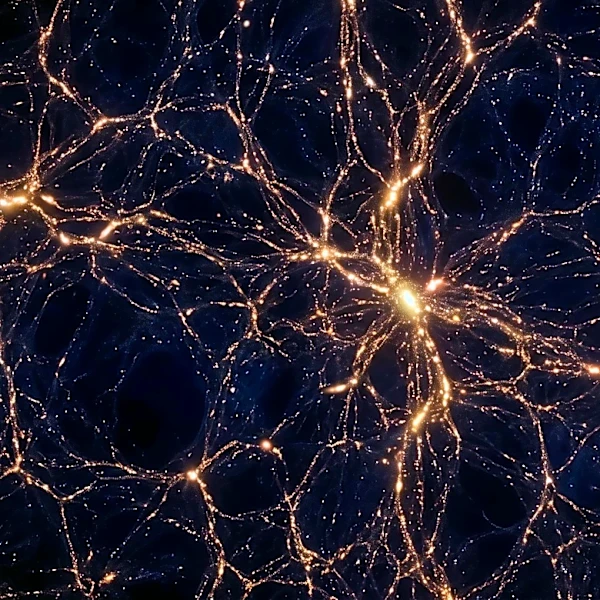
The Dark Energy Spectroscopic Instrument (DESI) has completed its five-year survey, observing over 47 million galaxies and quasars to create a large-scale, three-dimensional map of the universe. Initial findings from the comprehensive five-year analysis of dark energy are expected in 2027. These results will provide significant insight into whether dark energy varies over time. While current DESI data alone align with the standard ΛCDM model, combining it with other cosmological observations (like cosmic microwave background and supernovae data) shows indications, with statistical significance between 2.8 and 4.2 sigma, that dark energy may indeed be variable. Although a 5-sigma significance is typically required for a definitive discovery, these intriguing results warrant further investigation. Even if DESI confirms variable dark energy, predicting its behavior billions or trillions of years into the future will remain a significant theoretical challenge, requiring extrapolation of physical laws far beyond observed history.
Beyond the Headlines
Beyond the dramatic cosmic scenarios, the discussion of the universe's fate also touches upon the quantum possibility of 'vacuum decay.' This theory suggests that our universe's vacuum might be in a metastable state, a 'false vacuum,' which could theoretically transition to a lower-energy state. Such a transition would fundamentally alter the physical properties of space, potentially making matter as we know it unable to exist. While highly speculative and dependent on precise values of fundamental parameters, this concept introduces a less predictable and potentially abrupt end to the universe, distinct from the gradual processes of the Big Freeze, Big Rip, or Big Crunch. This highlights the interplay between cosmology and quantum physics, suggesting that the universe's ultimate destiny might be governed by phenomena at the smallest scales. It also underscores the vastness of our ignorance about the universe's fundamental nature, even as we develop models that span timescales of 10^100 years.