







What's Happening?
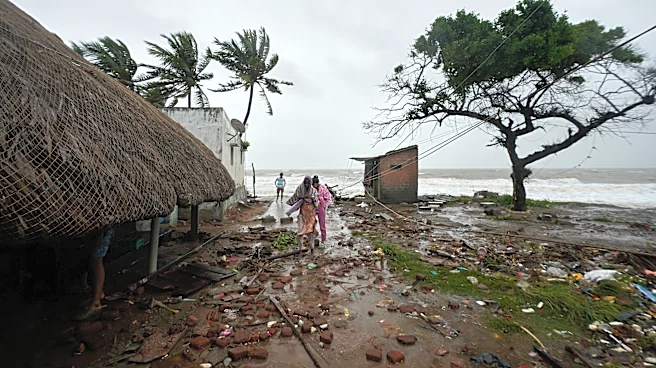
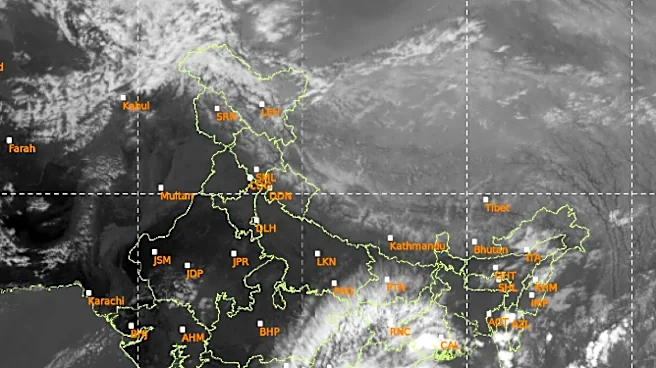
Congress General Secretary Priyanka Gandhi Vadra has called upon Congress workers to provide extensive support for relief operations in areas affected by Cyclone Arnab in India. The cyclone has caused widespread devastation, heavy rainfall, and flooding
in Odisha and Andhra Pradesh. Gandhi expressed deep concern for those who have lost loved ones, homes, and livelihoods, urging governments to ensure swift relief and rehabilitation. Union Home Minister Amit Shah has also assured assistance to the affected states, confirming that the National Disaster Response Force (NDRF) and State Disaster Response Forces (SDRF) are conducting rescue and relief operations. The cyclone has led to flattened paddy fields in Chhattisgarh and temporary suspension of train operations in the Visakhapatnam-Bhubaneswar mainline due to floodwater surges.
Why It's Important?
The call for grassroots relief efforts by Priyanka Gandhi highlights the significant impact of Cyclone Arnab on multiple Indian states, necessitating a broad-based response beyond government agencies. The involvement of political parties in disaster relief can mobilize volunteers and resources, supplementing official efforts and reaching affected communities more quickly. The devastation, including loss of life, homes, and agricultural land, underscores the severe economic and social disruption caused by such extreme weather events. The coordinated efforts of both political figures and disaster response teams are crucial for mitigating the immediate suffering and facilitating the long-term recovery of the affected populations, emphasizing the importance of national unity in times of crisis.
What's Next?
Relief and rescue operations are expected to intensify in the coming days as the full extent of Cyclone Arnab's damage becomes clearer. Congress workers, following Priyanka Gandhi's directive, will likely engage in on-the-ground assistance, including distributing aid and helping with immediate recovery efforts. State and central governments, supported by the NDRF and SDRF, will continue their coordinated response, focusing on providing shelter, food, and medical aid to displaced individuals. The temporary suspension of train services will likely be reviewed as floodwaters recede, and efforts to restore essential infrastructure will commence. Long-term rehabilitation plans for those who have lost homes and livelihoods will also be a critical next step.
Beyond the Headlines
The response to Cyclone Arnab, particularly the call for political party involvement in relief efforts, reflects the broader role of civil society and political organizations in disaster management in India. Beyond immediate aid, such events often expose underlying vulnerabilities in infrastructure and preparedness, prompting calls for improved early warning systems and climate-resilient development. The destruction of agricultural fields highlights the economic fragility of farming communities and the need for robust support systems to help them recover. This disaster also underscores the increasing frequency and intensity of extreme weather events, raising critical questions about climate change adaptation strategies and the long-term sustainability of livelihoods in vulnerable regions.