



What's Happening?
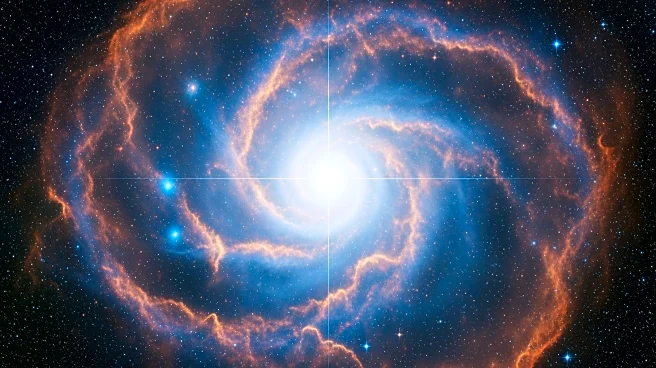
NASA's James Webb Space Telescope has captured a detailed image of a dying star within the Helix Nebula, located 650 light years away. The image, taken with the telescope's NIRCam infrared instrument, shows a white dwarf star shedding its outer layers,
creating a luminous cloud of gas and dust. This process is a preview of what could eventually happen to our Sun. The Helix Nebula, often compared to the 'Eye of Sauron' from 'Lord of the Rings', is a planetary nebula, a misnomer as it relates to stars rather than planets. The white dwarf was once a star similar to the Sun, which expanded into a red giant before shedding its outer shell. The material released during this process contributes to the cosmic environment, seeding it with elements necessary for the formation of new stars and planets.
Why It's Important?
The image from the James Webb Space Telescope provides valuable insights into the life cycle of stars and the processes that contribute to the cosmic ecosystem. Understanding these processes is crucial for astronomers as they study the formation of new stars and planetary systems. The Helix Nebula's transformation illustrates the recycling of stellar material, which plays a significant role in the evolution of galaxies. This research can help scientists predict the future of our own solar system and the fate of the Sun. Additionally, the detailed imagery from the James Webb Telescope enhances our understanding of the universe's structure and the dynamic interactions within it.