




What's Happening?
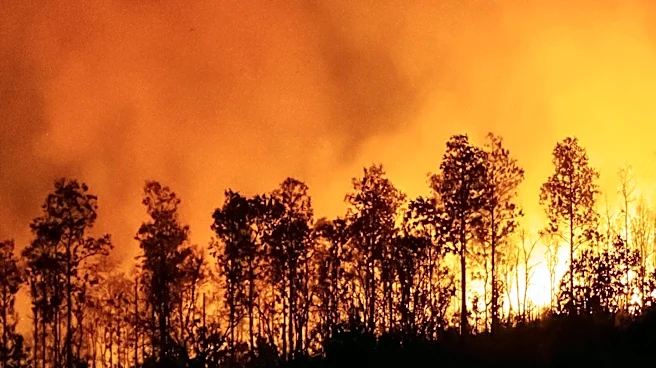
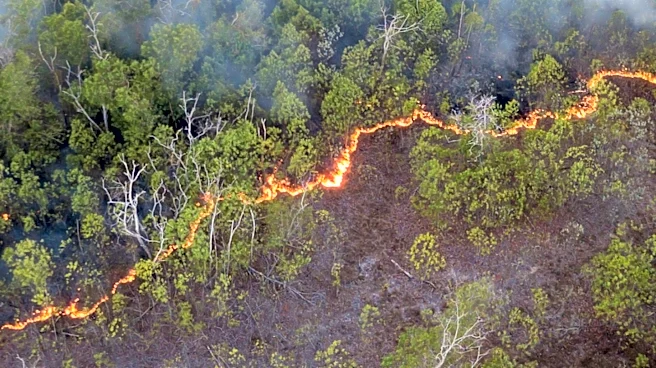
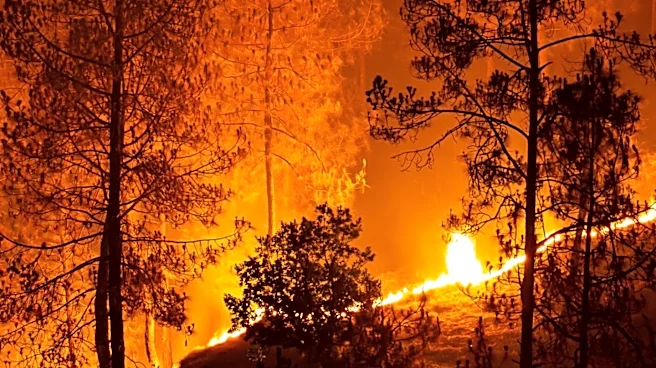
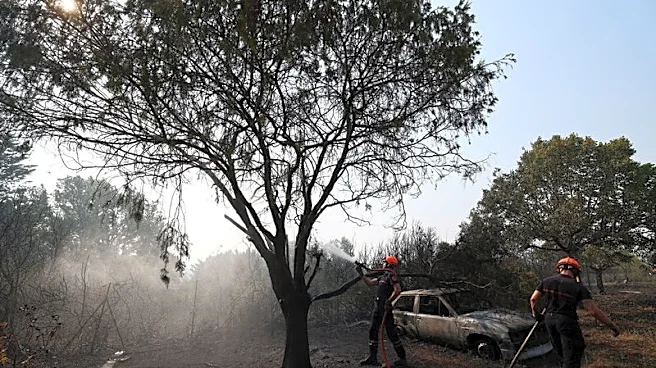
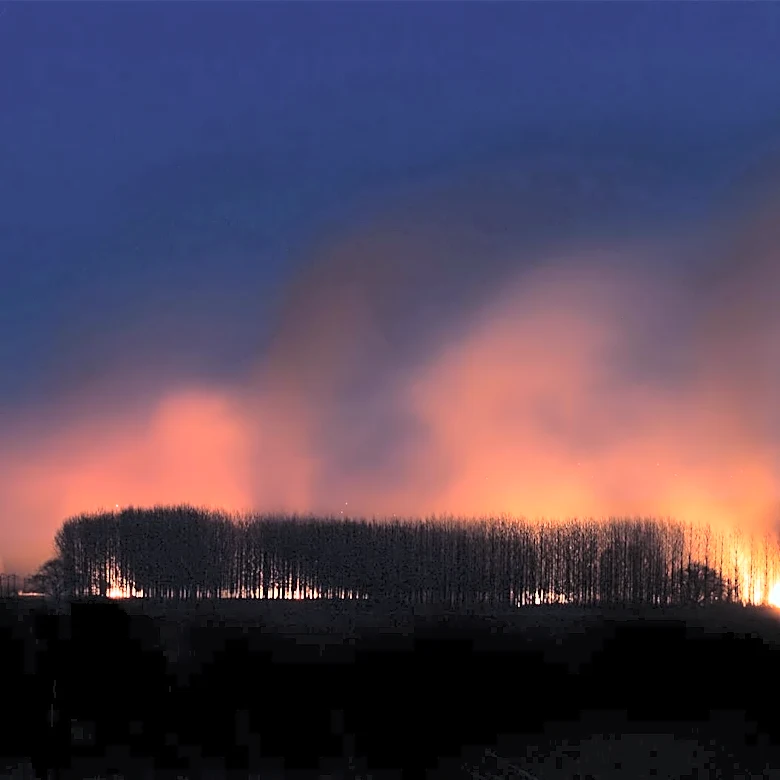
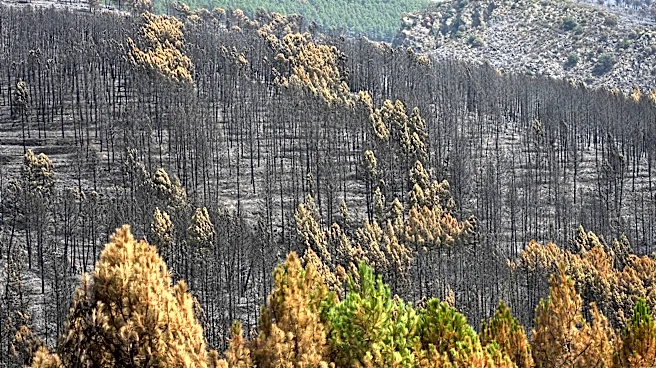
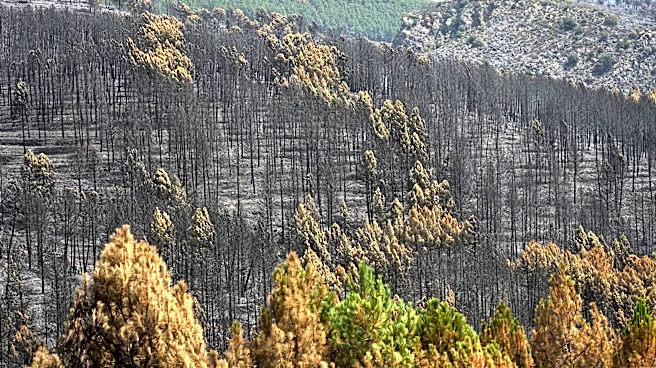
Spain has declared a state of emergency in the Madrid region due to severe wildfires exacerbated by extreme heat and strong winds. Over 10,000 people have been evacuated as emergency services work to contain the blazes. The fires have been particularly
intense in areas near Toledo, where several villages have been evacuated. The situation is part of a broader pattern of wildfires affecting western Europe, with France also seeking assistance from the European Union. The fires are attributed to climate change, which has increased the frequency and intensity of such events.
Why It's Important?
The declaration of a state of emergency highlights the growing impact of climate change on natural disasters, particularly wildfires. These events pose significant risks to human life, property, and the environment. The evacuations and emergency responses strain local resources and highlight the need for international cooperation in disaster management. The situation underscores the urgency of addressing climate change to prevent further escalation of such disasters, which have far-reaching implications for public safety and economic stability.
What's Next?
Efforts to contain the wildfires will continue, with emergency services deploying additional resources to affected areas. The Spanish government may seek further assistance from the European Union and other international bodies. Long-term strategies will likely focus on improving fire prevention and response capabilities, as well as addressing the root causes of climate change. The situation may prompt policy discussions on enhancing infrastructure resilience and investing in sustainable practices to mitigate future risks.