







What's Happening?
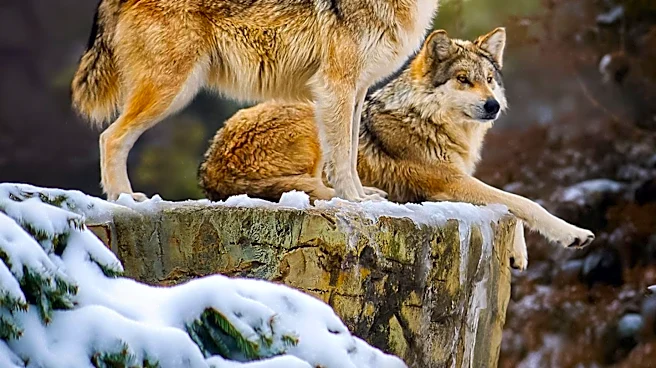
Yellowstone National Park has become a focal point for wolf conservation efforts in the United States. The park, which spans over 2.2 million acres across Wyoming, Montana, and Idaho, reintroduced gray wolves in 1995 after they were eradicated in the early
20th century. This reintroduction aimed to restore the ecological balance by reintroducing a top predator to the ecosystem. The wolves have since become a major attraction for visitors and a subject of extensive scientific study. However, their presence has sparked controversy, particularly among ranchers and local communities who are concerned about livestock predation. Efforts to manage the wolf population involve a combination of non-lethal deterrents and, in some cases, lethal measures, reflecting a broader societal compromise between wildlife conservation and human economic interests.
Why It's Important?
The reintroduction of wolves to Yellowstone has significant ecological and socio-economic implications. Ecologically, wolves play a crucial role in controlling ungulate populations, which can help maintain vegetation balance. This has led to discussions about trophic cascades, where the presence of a top predator influences the entire ecosystem. Socio-economically, the presence of wolves has boosted tourism, as many visitors come to the park specifically to see these animals. However, the impact on local ranchers, who face potential livestock losses, highlights the ongoing tension between conservation efforts and agricultural interests. The situation underscores the need for policies that balance ecological benefits with the livelihoods of local communities.
What's Next?
Future management of Yellowstone's wolf population will likely continue to involve a mix of scientific research and stakeholder engagement. As wolves expand their range beyond the park, there will be increased pressure to develop strategies that mitigate conflicts with human activities. This may include enhanced compensation programs for ranchers, improved non-lethal deterrents, and continued public education about the ecological role of wolves. The ongoing dialogue between conservationists, government agencies, and local communities will be crucial in shaping policies that support both wildlife conservation and human economic interests.
Beyond the Headlines
The story of wolves in Yellowstone is emblematic of broader cultural narratives about wilderness and human coexistence with nature. Wolves have historically been depicted as villains in folklore, which influences public perception and policy. The reintroduction of wolves challenges these narratives, offering an opportunity to re-evaluate human relationships with nature. Additionally, the success of the reintroduction program in Yellowstone serves as a model for other conservation efforts worldwide, highlighting the potential for restoring ecosystems through the reintroduction of apex predators.