




What's Happening?
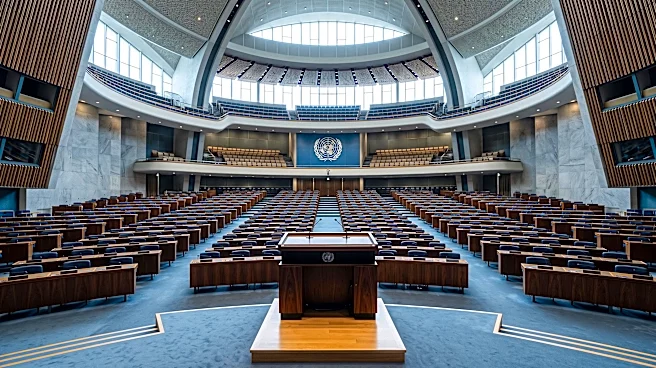
The United States abstained from a United Nations (UN) resolution aimed at intensifying efforts to prevent and eliminate violence against women and girls. Somalia was the sole country to vote against the resolution, while Russia, Argentina, Burkina Faso,
Belarus, and Cameroon also abstained. The resolution, sponsored by France and the UK, urges member states to implement comprehensive, gender-responsive measures to combat all forms of violence, intimidation, and attacks against women and girls, including addressing risk factors through legislation and policies. A key focus of the resolution was the extension of its definition of violence to include online and digital technologies, urging countries to adopt laws to protect women and girls from defamation and hate speech in digital spaces. The U.S. explained its abstention by expressing disappointment over the inclusion of 'controversial terminology' such as 'sexual and reproductive health' and 'safe abortion' within the resolution, stating that there is no international 'right to abortion' under any terminology.
Why It's Important?
The U.S. abstention from this UN resolution is significant as it highlights ongoing international disagreements regarding reproductive rights and terminology within human rights frameworks. While the resolution broadly aims to combat violence against women and girls, the U.S. stance underscores a divergence in interpretation of certain phrases, particularly those related to sexual and reproductive health. This can impact global efforts to standardize and strengthen protections for women and girls, as a lack of consensus among major nations can weaken the collective impact of such resolutions. For civil society groups, including Human Rights Watch, which supported the resolution, the abstention by the U.S. and other nations is concerning as it could be perceived as undermining multilateralism and the international human rights framework. The debate over 'national sovereignty' versus universal human rights principles, which was also a point of contention in the resolution's drafting, further complicates international cooperation on these critical social issues.
What's Next?
The resolution has been approved at the committee level during the 81st session of the UN and still requires formal adoption by the General Assembly in December. The abstention by the United States and other nations indicates that debates over terminology related to sexual and reproductive health will likely continue in future international discussions on women's rights. Civil society organizations, including Human Rights Watch, Amnesty International, and the Center for Reproductive Rights, will likely continue to advocate for the full inclusion of comprehensive language in such resolutions, emphasizing that sovereignty should not undermine universal human rights. The ongoing disagreements could lead to further challenges in achieving broad international consensus on gender-related issues, potentially affecting the implementation and effectiveness of global initiatives aimed at protecting women and girls from violence. Future UN resolutions on similar topics may see continued efforts to either include or remove the contested terminology, reflecting the persistent ideological divides among member states.
Beyond the Headlines
The U.S. abstention, rooted in objections to specific terminology, reflects a broader ideological struggle within international human rights discourse. The debate over 'sexual and reproductive health' and 'safe abortion' often intersects with national legal frameworks, cultural values, and political agendas, making consensus difficult. This situation highlights the tension between universal human rights principles and the concept of national sovereignty, where some states argue for the primacy of national laws and interpretations over international norms. The resolution's focus on digital violence also points to evolving challenges in human rights, as technology creates new avenues for abuse. The inability of major global actors to fully align on comprehensive language for women's rights resolutions could have long-term implications for the development of international law and the protection of vulnerable populations, potentially leading to a fragmentation of human rights standards and a weakening of multilateral institutions' ability to address global social issues effectively.