
What's Happening?
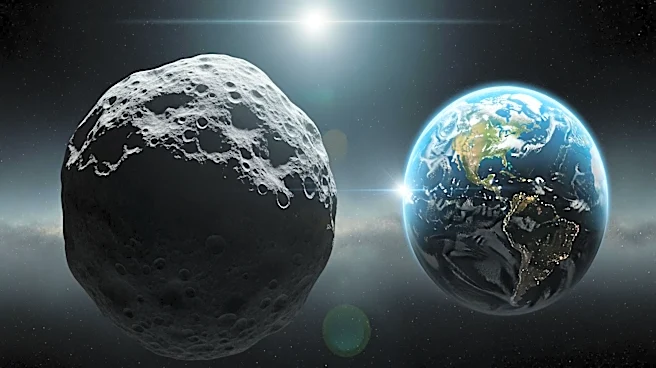
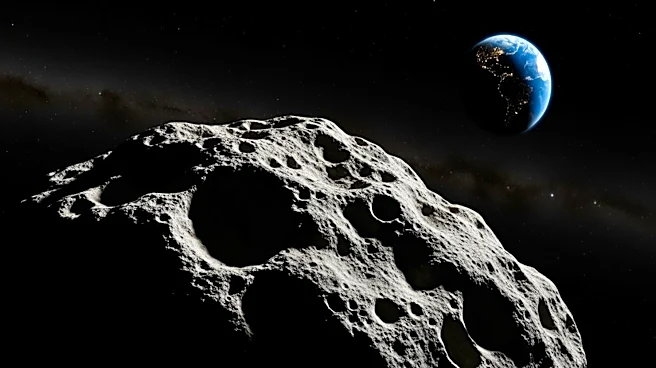
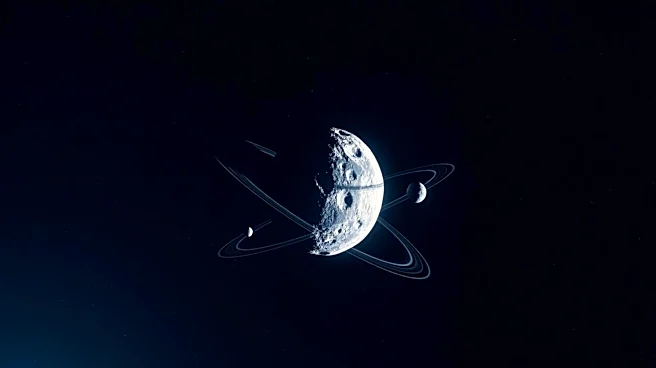
NASA has announced that the asteroid Apophis, named after the ancient Egyptian God of evil and destruction, will make a close fly-by of Earth on April 13, 2029. The asteroid, which measures approximately
1,230 feet in length, will pass within 20,000 miles of Earth's surface, closer than many satellites. This event is unprecedented in recorded human history, as asteroids of this size typically pass by Earth only once every few thousand years. Despite initial concerns about a potential impact, NASA has confirmed that Apophis poses no threat to Earth or its inhabitants. The asteroid was first discovered in 2004 and briefly reached level 4 on NASA's Torino Impact Hazard Scale, but further observations have ruled out any risk of collision for at least the next 100 years.
Why It's Important?
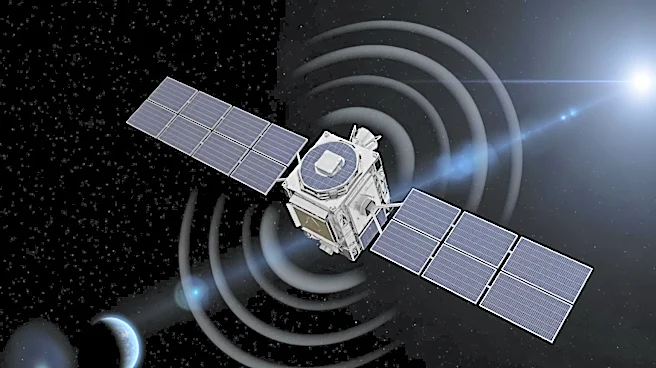
The close approach of Apophis presents a unique opportunity for scientific observation and study. NASA and other space agencies plan to use this event to gather data on the asteroid's composition, structure, and trajectory. Understanding more about Apophis and similar near-Earth objects can enhance our knowledge of asteroid dynamics and improve our ability to predict and mitigate potential future threats. The European Space Agency is also planning a mission to observe how Earth's gravity affects the asteroid. This research could have significant implications for planetary defense strategies and the development of technologies to protect Earth from potential asteroid impacts.
What's Next?
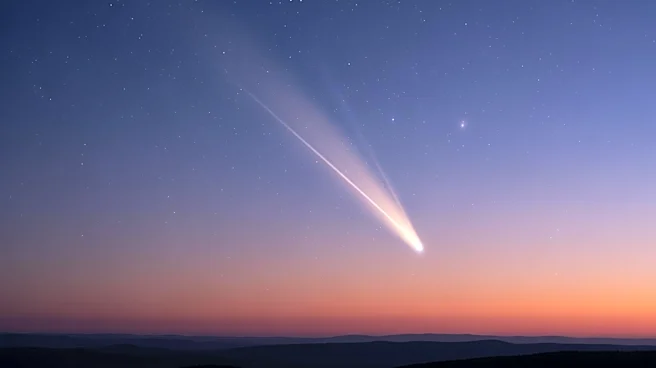
Following the 2029 fly-by, Apophis is expected to return in 2036, although it will not come as close to Earth. In the meantime, NASA and other space agencies will continue to monitor the asteroid and prepare for the upcoming observation opportunities. The data collected during the 2029 event will likely inform future missions and research initiatives aimed at understanding and mitigating asteroid threats. Additionally, the public will have the chance to observe the asteroid's approach with the naked eye, depending on weather conditions, providing a rare opportunity for widespread engagement with space science.