






What's Happening?
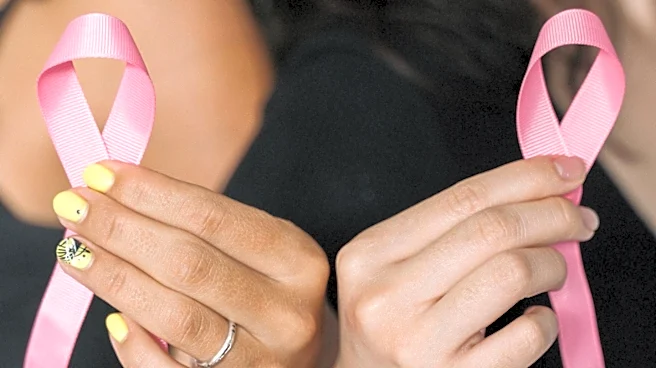
Ashley Park, known for her role as Mindy Chen in 'Emily in Paris' and her Broadway performance in 'Mean Girls,' has shared her personal battle with acute myeloid leukemia (AML) during her high school years. At 15, Park was diagnosed with this rare and aggressive
form of blood cancer, which begins in the bone marrow and can quickly spread. Her treatment involved eight months of intensive chemotherapy, designed to eliminate all blood cells and cancer cells. This powerful regimen left her severely immunocompromised, necessitating numerous blood transfusions to rebuild her immunity. Park emphasizes that these transfusions, which she referred to as 'bags of health,' were instrumental in her recovery and eventual remission. She is now cancer-free and actively raising awareness about the critical need for blood donations through the 'We Give Blood' campaign, in collaboration with Abbott and the Big Ten Conference. Park highlights that approximately 25% of all blood donations benefit cancer patients, underscoring the direct impact donors have on saving lives.
Why It's Important?
Ashley Park's story brings significant attention to the vital role of blood donations in cancer treatment, particularly for rare and aggressive forms like acute myeloid leukemia. Her public advocacy through the 'We Give Blood' campaign can substantially increase public awareness and encourage more individuals, especially young people, to donate blood. This is crucial because blood products are not only essential for cancer patients undergoing chemotherapy but also for those with various medical conditions, accident victims, and surgical patients. A consistent and sufficient blood supply is a cornerstone of the U.S. healthcare system, and shortages can lead to delayed treatments and adverse patient outcomes. By sharing her experience, Park humanizes the need for donations, moving beyond abstract statistics to illustrate the direct, life-saving impact on individuals. Her involvement with a major healthcare company and a collegiate athletic conference broadens the reach of this message, potentially inspiring a new generation of donors and reinforcing the importance of community health initiatives.
What's Next?
Following Ashley Park's public disclosure and her involvement in the 'We Give Blood' campaign, it is anticipated that there will be increased efforts to promote blood donation drives and educational initiatives across the U.S. The collaboration with Abbott and the Big Ten Conference suggests a strategic focus on engaging younger demographics and leveraging established community networks to boost donor participation. We can expect to see more public service announcements, social media campaigns, and possibly on-campus blood drives aimed at demystifying the donation process and highlighting its life-saving benefits. Healthcare organizations and blood banks will likely capitalize on this increased visibility to recruit new donors and retain existing ones. The campaign's emphasis on the fact that a significant portion of donations goes to cancer patients may also lead to more targeted appeals within cancer support communities and among individuals with personal connections to cancer battles. The long-term goal is to foster a culture of regular blood donation, ensuring a stable supply for all who need it.
Beyond the Headlines
Ashley Park's narrative extends beyond a simple call for blood donations; it delves into the profound psychological and emotional resilience required to overcome a life-threatening illness at a young age. Her experience of isolation during treatment and her subsequent embrace of unpredictability as a 'tool for life' offer a powerful message about coping with adversity. This perspective can resonate deeply with individuals facing their own health challenges, fostering a sense of hope and agency. Furthermore, her story highlights the often-unseen network of support—from medical professionals to anonymous blood donors—that underpins modern healthcare. It underscores the ethical dimension of communal responsibility, where individual acts of generosity, like donating blood, contribute to the collective well-being and survival of others. This broader implication reinforces the idea that health is a shared societal asset, dependent on mutual aid and compassion, and challenges individuals to consider their role in supporting public health infrastructure.