





What's Happening?
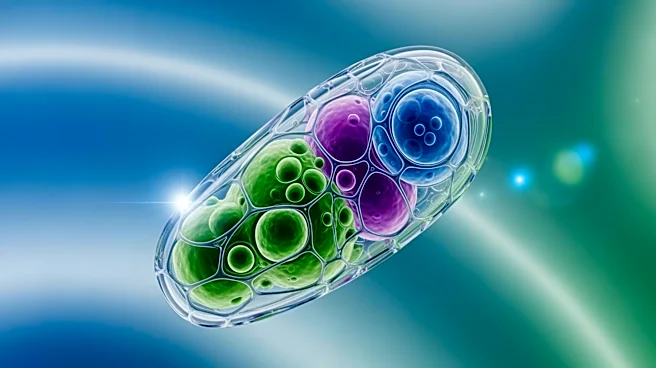
Researchers are developing biohybrid microrobots, which are microscopic entities composed of algae, bacteria, and other single-celled organisms. These microrobots are engineered to perform specific tasks, such as delivering targeted therapies within the human
body. The technology involves programming these organisms using light or electromagnets to navigate and perform functions like delivering medicine to hard-to-reach areas. The research, led by biomedical engineer Joseph Wang and chemical engineer Liangfang Zhang at the University of California, San Diego, has shown that these microrobots can be guided using blue and red lights to form specific shapes and disperse as needed. This innovation represents a shift from traditional 'passive' medicine to 'active' medicine, which can be programmed to target specific regions or cell types, potentially leading to more effective treatments with fewer side effects.
Why It's Important?
The development of biohybrid microrobots could revolutionize the medical field by providing a new method for delivering drugs more precisely and effectively. This technology could reduce the invasiveness of treatments and minimize side effects, benefiting patients with conditions that require targeted therapy, such as cancer. Additionally, the potential applications extend beyond medicine to environmental uses, such as decontaminating water bodies by neutralizing or absorbing toxins. This dual capability highlights the versatility and potential impact of microrobots in addressing both health and environmental challenges. The advancement of this technology could lead to significant improvements in public health and environmental conservation efforts.
What's Next?
Future developments in biohybrid microrobots may include refining their ability to navigate complex environments within the human body and enhancing their capacity to carry and deliver a variety of therapeutic payloads. Researchers are also exploring the use of different types of algae and bacteria to expand the range of applications, including treating stomach conditions with organisms adapted to acidic environments. As the technology progresses, regulatory and ethical considerations will need to be addressed to ensure safe and effective implementation in medical and environmental contexts. Continued research and collaboration among scientists, medical professionals, and policymakers will be crucial in advancing this promising field.
Beyond the Headlines
The use of biohybrid microrobots raises important ethical and legal questions regarding the manipulation of living organisms for technological purposes. The integration of biological and synthetic components challenges traditional definitions of life and machine, prompting discussions about the implications of such technologies on natural ecosystems and human health. Long-term, the widespread adoption of microrobots could lead to shifts in medical practices and environmental management strategies, necessitating new frameworks for regulation and oversight. As these technologies become more prevalent, society will need to consider the balance between innovation and ethical responsibility.