
What's Happening?
Scientists at the University of Southampton have engineered next-generation antibodies designed to enhance the immune system's response to cancer. The research, published in Nature Communications, focuses
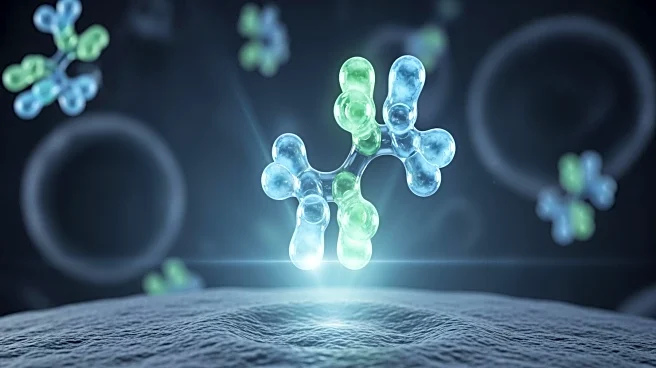
on improving the activation of T cells, which are crucial for attacking cancer cells. Traditional antibodies, typically Y-shaped with two arms, can only bind to two receptors at a time, limiting their effectiveness. The new antibodies, however, have four binding arms, allowing them to attach to more receptors simultaneously. This design also recruits a second immune cell, clustering CD27 receptors and amplifying the activation signal, mimicking the body's natural process. Laboratory tests on mice and human immune cells demonstrated that these antibodies significantly improved the activation of CD8+ T cells, known for their ability to destroy cancer cells directly.
Why It's Important?
This development is significant as it represents a potential breakthrough in cancer immunotherapy. By enhancing the activation of T cells, the new antibodies could lead to more effective treatments for cancer patients, particularly those who do not respond well to existing therapies. The ability to mimic the body's natural immune response more closely could result in stronger and more targeted attacks on tumors, potentially improving patient outcomes. This research underscores the importance of innovative approaches in the fight against cancer, offering hope for more effective and personalized treatment options.
What's Next?
The next steps involve further testing and clinical trials to evaluate the safety and efficacy of these engineered antibodies in humans. If successful, this approach could be integrated into existing cancer treatment protocols, potentially in combination with other therapies to maximize effectiveness. Researchers will likely explore the application of this technology to various types of cancer, assessing its versatility and potential as a universal cancer treatment. The continued support from organizations like Cancer Research UK will be crucial in advancing this promising research.
Beyond the Headlines
The development of these antibodies also raises important questions about the future of cancer treatment and the role of biotechnology in medicine. As researchers continue to push the boundaries of what is possible with engineered antibodies, ethical considerations regarding access to and affordability of such treatments will become increasingly important. Additionally, the success of this research could pave the way for similar innovations in treating other diseases, highlighting the broader potential of immunotherapy.