





What's Happening?
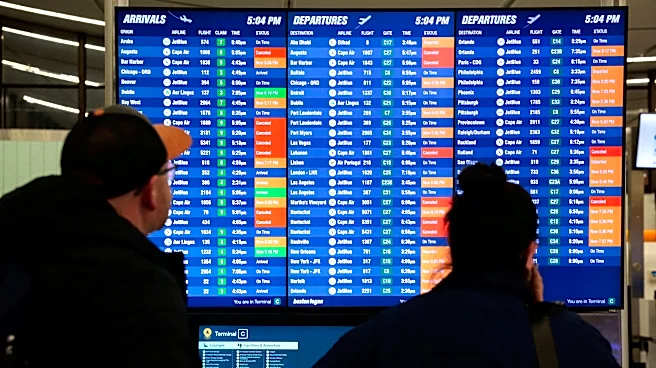
Travelers at Austin Straubel International Airport in Green Bay faced significant delays and cancellations on Friday due to an hours-long ground stop. The Federal Aviation Administration (FAA) issued a nationwide ground stop following a telecommunications
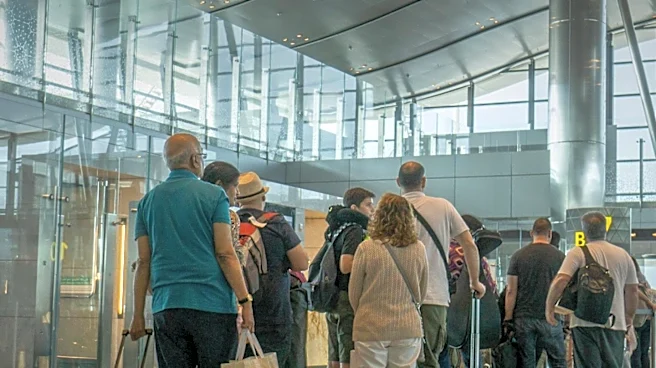
outage, which grounded all flights across the country. Passengers at GRB, including Sarah Gerber who was en route to a mission trip in Argentina, experienced extended waits and deboarding after already boarding their planes. Despite the ground stop being lifted later in the evening, many flights remained canceled. The airport confirmed it remained fully staffed and operational, prepared to support flights as airlines resumed service, advising passengers to monitor their flight status directly with their carriers for updates. Some travelers, like a group of Packers fans from California, resorted to alternative transportation, such as a three-hour Uber ride from Chicago, to reach Green Bay.
Why It's Important?
The nationwide ground stop, triggered by a telecommunications outage, highlights the critical vulnerability of air travel infrastructure to technical disruptions. Such incidents can cause widespread economic and personal impact, affecting not only individual travel plans but also business operations reliant on timely air cargo and personnel movement. For Green Bay, a city that often sees an influx of visitors for events like Packers games, these disruptions can impact local tourism and hospitality sectors. The reliance on a single, centralized system for air traffic control means that a technical glitch can cascade into a national crisis, underscoring the need for robust backup systems and resilient communication networks to maintain essential services and minimize economic fallout. The event also brings into focus the ripple effect on connected industries, from ground transportation services experiencing increased demand to the potential for rescheduled or postponed events.
What's Next?
Following the lifting of the ground stop, Austin Straubel International Airport anticipates continued delays as airlines work to resume normal operations and rebook affected passengers. Travelers are strongly advised to maintain direct communication with their respective airlines for the most current information regarding flight statuses. The FAA will likely conduct an investigation into the telecommunications outage to identify the root cause and implement measures to prevent future occurrences. This incident may prompt a review of national air traffic control system redundancies and cybersecurity protocols to safeguard against similar disruptions. Airlines will face the challenge of managing a backlog of flights and passengers, potentially leading to ongoing schedule adjustments and increased operational costs in the short term.
Beyond the Headlines
This incident underscores the broader implications of technological dependencies in critical national infrastructure. A single point of failure, such as a telecommunications outage, can paralyze an entire sector, revealing the fragility of modern systems. Beyond the immediate travel disruptions, such events raise questions about national security, economic resilience, and the need for continuous investment in infrastructure modernization and redundancy. The experience of travelers resorting to lengthy ground transportation alternatives also highlights the human element of adaptability and resilience in the face of unforeseen challenges. This event could serve as a catalyst for discussions on diversifying communication systems and enhancing the robustness of air traffic control to mitigate the impact of future technical failures, ensuring the continuity of essential services and public confidence in air travel.