
What's Happening?
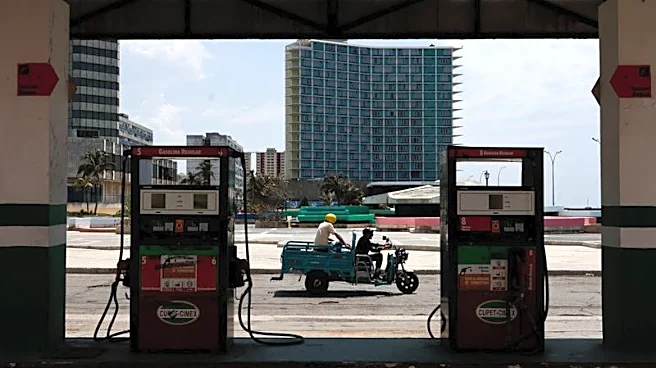
Cuba is experiencing widespread power outages due to a severe fuel shortage, leading to protests in Havana and other areas. Energy Minister Vicente de la O Levy announced that the country has run out of
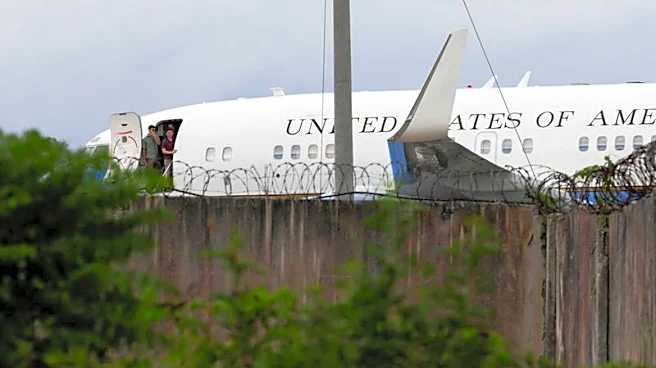
fuel reserves, relying only on domestic gas and crude oil. The situation is exacerbated by US sanctions, which Cuban President Miguel Diaz-Canel described as a 'genocidal energy blockade.' The power grid is fragile, with outages lasting up to 19 hours in some areas. Protests have erupted, with residents expressing frustration over the blackouts. The US has offered $100 million in aid, contingent on distribution through the Catholic Church.
Why It's Important?
The fuel crisis in Cuba has significant implications for the country's economy and social stability. The blackouts disrupt daily life, affecting businesses, healthcare, and education. The protests indicate growing public dissatisfaction with the government's handling of the crisis. The situation also highlights the impact of US sanctions on Cuba, contributing to the island's economic challenges. The offer of aid from the US presents a potential diplomatic opportunity, though it comes with conditions that may affect Cuba's sovereignty. The crisis underscores the need for sustainable energy solutions and international cooperation to address Cuba's energy needs.