





What's Happening?
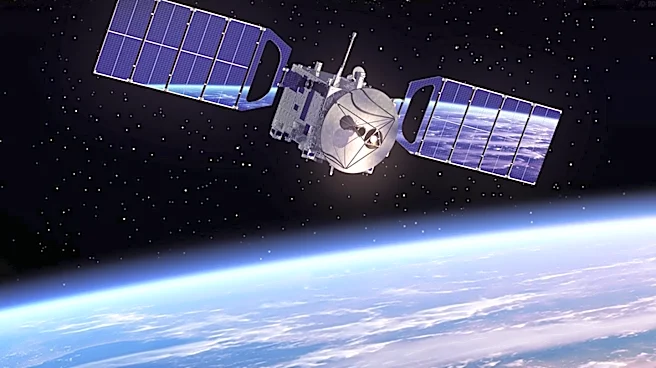
Space weather, driven by solar activity such as solar flares and coronal mass ejections, presents a substantial risk to modern technological infrastructure, including Global Navigation Satellite Systems (GNSS) like GPS. These solar phenomena release vast
amounts of energy and charged particles that can interact with Earth's magnetic field and atmosphere. When geomagnetic storms occur, they can significantly alter the ionosphere, a region of the upper atmosphere containing charged particles. These alterations introduce errors into positioning systems, which can be a minor inconvenience for smartphone users but a critical issue for sectors heavily reliant on precise satellite navigation, such as aviation, maritime communication, emergency services, precision agriculture, surveying, military systems, and autonomous technologies. The increasing dependence of modern infrastructure on these systems means that space weather impacts extend far beyond scientific interest, becoming a matter of technological security.
Why It's Important?
The vulnerability of GPS and other satellite-based systems to space weather has profound implications for the U.S. and its critical infrastructure. Industries ranging from transportation and logistics to defense and agriculture depend on accurate satellite navigation. Disruptions can lead to significant economic losses, operational failures, and potential safety hazards. For instance, errors in positioning systems can affect aircraft navigation, ship routing, and the precision required for modern farming techniques. Military operations, which increasingly rely on GPS for targeting and communication, could face severe challenges. Furthermore, the financial sector, which uses satellite timing for transactions, could experience disruptions. The potential for widespread impact underscores the necessity for robust mitigation strategies and improved forecasting capabilities to protect these essential services and maintain national security and economic stability.
What's Next?
Addressing the threats posed by space weather will involve continued investment in research and development for improved forecasting and resilient technologies. Scientists are continuously observing the Sun using ground-based observatories and spacecraft to better understand solar activity and predict the intensity and direction of solar storms. The goal is to provide governments, satellite operators, airlines, power companies, and space agencies with valuable warning time. Furthermore, there is a push to develop unjammable communication systems, such as laser communications, to counter GPS jamming and interference. International cooperation is also crucial, as space weather effects transcend national borders, necessitating shared observations, forecasts, and scientific data to enhance global preparedness and protect interconnected infrastructure.
Beyond the Headlines
The growing reliance on space-based infrastructure highlights a deeper societal vulnerability to natural phenomena that were once considered purely astronomical. The interconnectedness of modern technology means that a solar event millions of miles away can have tangible, immediate consequences on daily life and critical services. This situation raises ethical questions about the responsibility of governments and corporations to protect citizens and infrastructure from such threats, and the need for public awareness regarding the potential fragility of technologically advanced societies. It also emphasizes the long-term shift towards viewing space weather not just as a scientific curiosity but as a critical infrastructure and resilience issue, demanding proactive measures and strategic planning to ensure the continuity of essential services in an increasingly space-dependent world.